How to Choose Comfort Shoes as a Christmas Gift for Adults Over 50
Buying comfort shoes as a Christmas gift for an adult over 50 is a kind idea that often goes wrong for one simple reason: the person who will wear them cannot try them on before you wrap the box. Sizes differ by brand, feet can change with age, and a pair that looks right on the table may slip at the heel or feel tight later in the day.
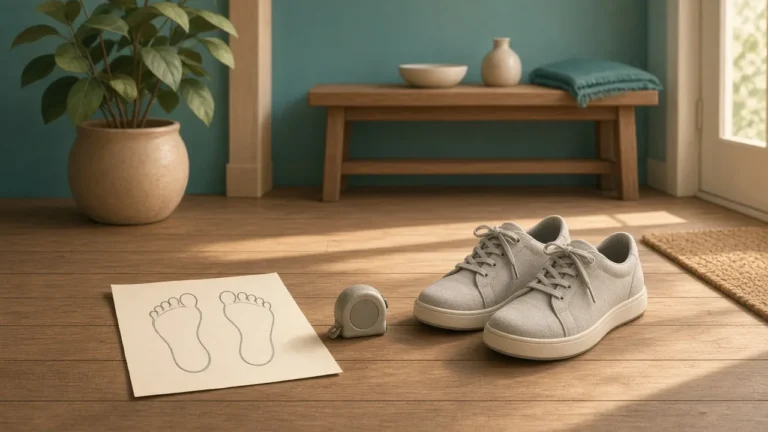
This guide is a practical shopping plan, not a store checkout and not medical advice. It shows how to ask a few discreet fit questions, how to tell a house shoe from a walking shoe, and when it is wiser to gift a fit check or our free tools instead of guessing the size. If you are buying for a parent, you can also use our printable measuring card and Parent Shoe Prep Check. Not sure what type of shoe they need? Start with the free Shoe Type Finder (about 2 minutes) or browse all free tools.
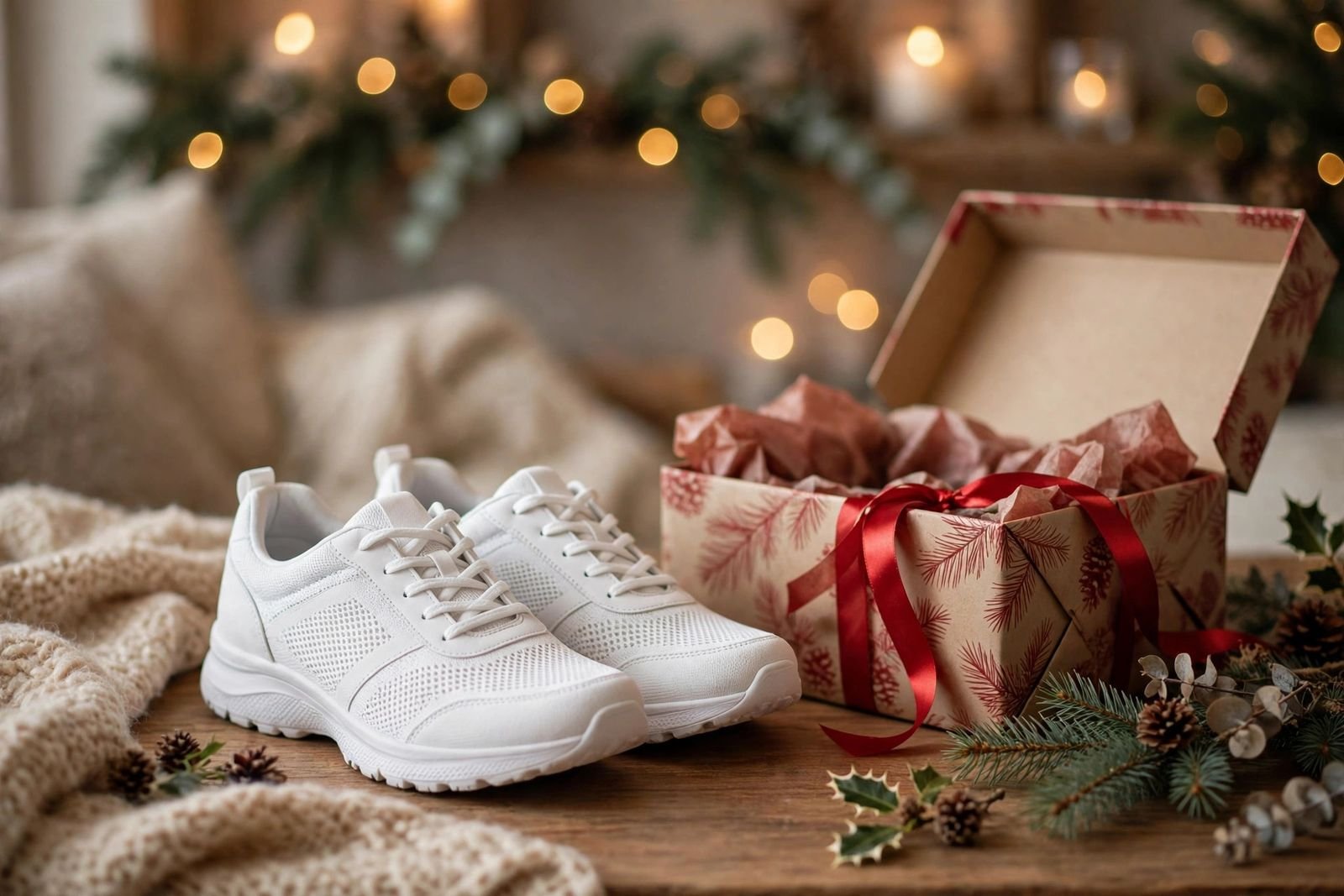
Quick answer: Do not guess the size. Ask, quietly, about their current length and width, how they like to get shoes on, and what the pair is actually for (the house, errands, or longer walks). Fit the larger foot, leave about a thumb’s width in front of the longest toe, and check that the heel stays put on a short hard-floor walk. Keep the box, tags and a gift receipt so an exchange is easy if the fit is not right. If you cannot get those facts, gift a fit check or a print card instead of a wrapped pair.
5 questions to ask before you wrap it
These can be asked in an ordinary conversation, or filled in on a print card if a surprise matters. You do not need a formal measuring session.
- What size and width are you wearing now, and has that changed in the last year? Measure both feet, standing, later in the day, and fit the larger one. Brand sizes differ, so treat the number as a starting point.
- Do you prefer slip-ons, straps, or laces? Easy entry is only a good gift if the heel still holds on a short walk.
- Are these for the house, everyday errands, or longer walks and travel? A house shoe and a walking shoe are not the same gift.
- Do your feet need extra width or toe room later in the day? Pressure at the sides or the ball of the foot often points to width, not a longer size.
- If the fit is not right, how will we exchange them? Note the return window, who pays return shipping, and ask for a gift receipt. Keep the box and tags.
How to gift shoes when they cannot try them on
The usual trap is to look at an old pair in the closet, or remember a size from years ago, and order that. Feet can change after 50. Swelling later in the day and a wider forefoot are common, and many people have one foot that is a little longer or wider than the other. A calm home measure beats a guess.
If you can ask discreetly, or complete a card together:
- Measure later in the day, standing, in the socks they will actually walk in.
- Note length on both feet (heel to the longest toe) and keep the larger measurement.
- Note width at the ball of the foot, not only length. If the sides or the ball feel crowded, a true wide width in the measured length is often a better starting point than sizing up. See our Half Size vs Wide Check and walking shoes for wide feet.
- When you can check a pair before it is a keeper, leave about a thumb’s width (about 1/2 inch, or 1 to 1.5 cm) beyond the longest toe, and make sure the toes can wriggle. More on this in our shoe fit and buying guide and the guide to fitting both feet when one is bigger.
Brand labels are not interchangeable. Confirm the labeled size and width on the pair you buy, then use the try-at-home checks below during the return window.
Heel hold still matters, even as a gift
Easy entry is not enough if the heel lifts, rubs, or slaps on every step. Before anyone keeps the pair, do a short walk test: a few minutes on carpet first so the outsoles stay clean, then a short walk on tile or wood. The heel should stay put at a normal pace. A little give when the shoe first goes on can settle; repeated lift on every step usually means a different size, width, or model, not a shoe to “live with.”
The free Shoe Fit Checker walks through practical questions on length, width, toe room, and heel hold if something feels off after that short test.
Slip-on, straps, or laces?
Ask how they like to get shoes on. The answer should drive the gift, not the wrapping paper.
- Traditional laces offer the most adjustable midfoot and heel fit. They take a little longer to put on, which is fine for many longer walks.
- Straps or hook-and-loop closures are easier to re-adjust if feet swell or sock thickness changes. See our Velcro walking shoes guide.
- Slip-ons and hands-free slip-ins are the fastest on and off. They are a thoughtful gift only when the heel holds and the midfoot feels gently wrapped on a short hard-floor walk. Details are in our hands-free slip-on walking shoes guide.
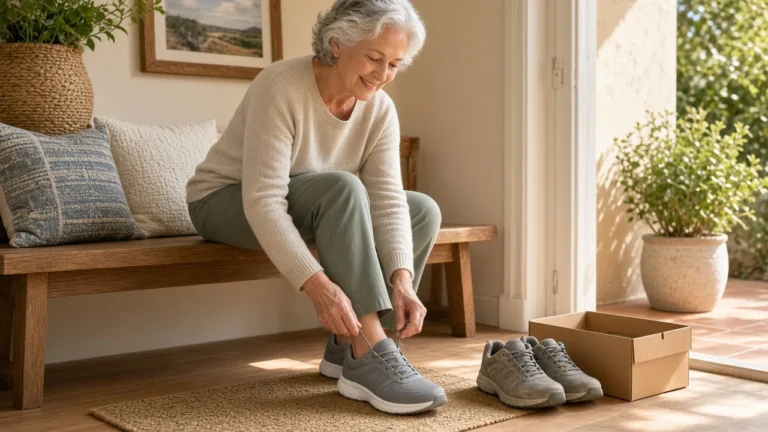
Many adults over 50 keep more than one pair: a hands-free option for quick errands, and a lace-up or strap shoe for longer walks. That is a preference, not a rule. If bending to tie is the main issue, easy entry is worth prioritizing, then test heel hold before you decide the gift is a keeper.
House shoes vs walking shoes
Match the gift to how the shoes will actually be used. A house shoe or indoor slipper is for around the house. A walking shoe is for errands, neighborhood loops, and longer days out, where cushioning, a secure heel, and outsole grip matter more. Giving an indoor pair for outdoor walking, or a structured walking shoe when they only wanted something for the house, is a common mismatch.
If the gift is for sightseeing or long city days, start with our travel walking shoes checklist and comfort shoes for city walking. If you would like to see comfort shoes out on real city streets, Mabel, 72, posts short city walks on MabelWalks on YouTube. If they want a more planted, secure feel underfoot, browse the stability shoes hub as a starting point, not as treatment for a medical condition.
Gift receipts and exchanges, in general terms
We do not name retailers here on purpose. Return policies change. Before you order, read the return text on the order you are about to place and note the return-by date and whether return shipping is prepaid or on you.
- Ask for a gift receipt, or keep the packing slip and order confirmation somewhere you can find after Christmas.
- Keep the original box and tags clean. Photograph the packing slip when the box arrives.
- Try the pair indoors first: carpet walk, then a hard-floor heel-hold check. Any rub, pinch, or numbness after ten to fifteen minutes is a signal to exchange, not to “break them in” if the return window is short.
- If anything fails, start the return or exchange while the window is still open.
If you are not confident you can get a clean exchange, do not wrap a guessed size. Use one of the alternatives below.
A better gift than guessing the size
Sometimes the most useful present is not a wrapped pair. You can gift a fit check together, a print-at-home measuring card, or a short session with our free tools, then choose the shoes once the facts are in. That still feels like a Christmas gift, and it avoids a box that has to go back in January.
- Buying walking shoes for a parent over 50 — print-friendly measuring and foot-tracing card, try-at-home checklist, and a free 4-tap Parent Shoe Prep Check.
- Shoe Type Finder — a short preference quiz that points toward shoe types, not a diagnosis.
- Shoe Fit Checker and Shoe Replacement Checker — practical checks for fit complaints and for a pair that may already be worn out.
- Wide Shoe Finder — when width is the recurring issue.
- All free tools and the shoe directory — starting points to browse by need and brand, with no buy buttons on this site.
Christmas comfort-shoe gift checklist
Skim this before you place the order or before you wrap the box.
- Current size and width noted for both feet, measured later in the day, standing, in usual socks.
- The larger foot is the one you are fitting.
- You know whether they want slip-ons, straps, or laces.
- You know whether the pair is for the house, errands, or longer walks and travel.
- Width or extra toe room has been considered, not only length.
- There is a plan for a short indoor heel-hold walk before the pair is kept.
- Return window, who pays return shipping, gift receipt, box and tags are all clear.
- If any of the above is missing, you are gifting a fit check or a print card instead of guessing.
Free from Shoes 50+. A shopping plan for gifting comfort shoes to adults over 50, not medical advice. Confirm current models, widths, and returns on the seller you choose.
Related guides and tools
- Free shoe tools — Finder, fit, width, replacement, and quiz in one place.
- Shoe Type Finder — What type of shoe is right for them?
- Shoe fit and buying guide — Length, width, closures, and when to replace.
- Buying walking shoes for a parent over 50 — Print card and prep check.
- Hands-free slip-on walking shoes — Heel hold, midfoot, and grip.
- Travel walking shoes and comfort shoes for city walking.
- Walking shoes hub · Stability shoes hub · Shoe directory · All guides by category.
FAQ
How do I choose comfort shoes as a Christmas gift if they cannot try them on?
Ask about current size and width, how they like to get shoes on, and what the pair is for. Measure both feet later in the day and fit the larger one. Keep a gift receipt and the box so an exchange is easy, and do a short indoor heel-hold walk before the pair is kept. If you cannot get those facts, gift a fit check or a print card instead of guessing.
What size should I buy when gifting shoes to someone over 50?
Do not rely on an old closet pair or a size from years ago. Measure both feet, standing, later in the day, and use the larger foot. Leave about a thumb’s width in front of the longest toe. If the sides or the ball of the foot feel tight, consider a wide width in the measured length rather than only sizing up. Brand sizes differ, so confirm the label on the pair you buy.
Are slip-on shoes a better Christmas gift than lace-ups?
Only if easy entry is what they want and the heel still holds on a short hard-floor walk. Laces are more adjustable. Straps are a middle path when feet swell or sock thickness changes. Ask first, then walk-test whatever you choose.
Should I gift house shoes or walking shoes?
Match the gift to daily use. House shoes are for indoor wear. Walking shoes are for errands, neighborhood walks, and travel days, where cushioning, a secure heel, and outsole grip matter more. If you are not sure, ask question 3 on the list above, or start with the Shoe Type Finder.
What if the shoes do not fit on Christmas morning?
That is why a gift receipt, the original box and tags, and a noted return window matter. Try the pair indoors, check heel hold and hotspots, and start the exchange while the window is open. Do not wait to “break in” a pair that already rubs or slips if the return period is short.
Health note: General footwear information only, not medical advice. Shoes 50+ does not diagnose or treat foot conditions. If you have foot pain, balance concerns, numbness, swelling that does not settle, diabetes, or circulation concerns, please consult a qualified healthcare professional, such as your doctor or a podiatrist, before relying on any shoe change.
Directory note: Shoes 50+ is a free shoe discovery site for adults over 50, not a store. We do not add buy buttons here.