Walking Shoes for Orthotics After 50: Will Your Insert Fit? (Take-Out-the-Insole Test)
Have an orthotic, a custom insole, or a favourite store-bought insert, and not sure which walking shoes it will fit? It is one of the most common shoe questions from adults over 50 and from adult children shopping for a parent. People ask which sneakers have room for an orthotic, whether slip-on shoes can take one, and whether they should size up. The honest answer is that it depends on the shoe and the insert, so this guide gives you a simple take-out-the-insole test, what to look for, and a free 4-tap Orthotic Fit Check you can copy or share.
This is general fitting information, not medical or orthotic advice. If your orthotic was prescribed, the professional who made it is the best person to ask which shoe features suit it. Not sure what type of shoe you need at all? Try the free Shoe Type Finder (about 2 minutes) or browse all free tools.
Quick answer: what makes a walking shoe orthotic-friendly
Most people who wear orthotics look for the same handful of features. None of them is a brand, so check each one on the exact pair you are trying.
- A removable insole. The shoe’s own insole (also called a footbed or sockliner) lifts out, so a full-length orthotic can take its place instead of sitting on top.
- Enough depth. With the orthotic in, the top of your foot should not press against the laces or upper.
- A heel that stays put. An insert lifts your foot a little higher, so a firm, padded heel cup and collar help keep your heel from slipping.
- Room at the front. About a thumb’s width in front of your longest toe, and no pinching across the ball of the foot.
- A closure you can adjust. Laces or hook-and-loop straps let you fine-tune the fit once the insert changes the shoe’s volume.
- Width options. If the shoe feels tight with the orthotic in, a wider version is often a better fix than a bigger size.
The take-out-the-insole test (store or home)
Do this with any shoe you are thinking about. It takes about 15 minutes and works in a store or with an online order at home, as long as you keep the shoes clean and the tags on.
- Bring your orthotic and your usual walking socks. Trying shoes without them can give you a very different fit.
- Shop later in the day if you can, when feet are often a little larger.
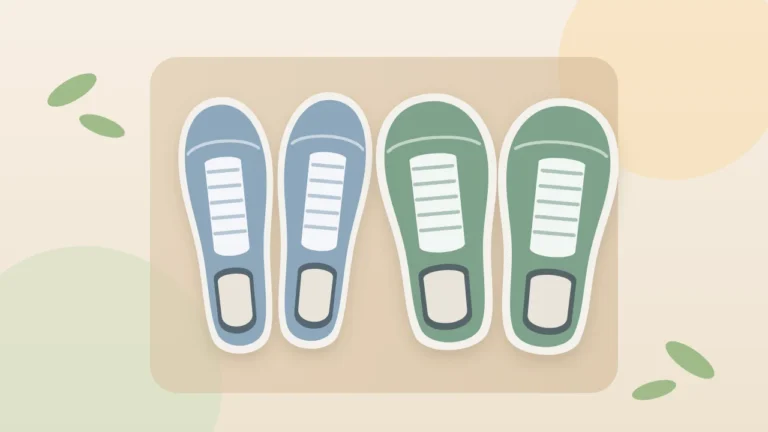
- Lift out the shoe’s insole. If it will not come out, it is probably fixed, and your insert would have to sit on top of it.
- Lay your orthotic on the shoe’s insole. The length and outline should match closely. If your orthotic is much wider or longer, that shoe is likely to feel tight.
- Put the orthotic in and check that it sits flat, reaching the back of the heel, without curling up at the sides.
- Re-fasten the shoe from the bottom and stand up. Check toe room, the top of the foot, and the heel.
- Walk for about 10 minutes, with turns and a step or two. Your heel should stay down and nothing should rub.
- Try both feet. Many people have one foot a little larger, so fit the larger foot.
Free Orthotic Fit Check (4 taps)
Answer four quick questions about your insert and the shoe you are trying. You get a short plan to check first, plus links to the right guides on Shoes 50+. Nothing is saved.
My Orthotic Fit Check
Pick one answer for each question, then tap Show my plan.
Free from Shoes 50+. A fitting checklist, not medical or orthotic advice. Nothing you pick is saved.
Should you size up for orthotics?
Not automatically. Some walkers find they need a little more length or width once an orthotic is in, and others fit their usual size once the shoe’s own insole comes out. Going up a full size to make room can leave the heel loose and the shoe’s flex point in the wrong place. If a shoe feels tight with your orthotic, compare a wider version with a half size up, and pick the one where the heel stays put. Our Half Size vs Wide Check walks you through it, and the Wide Shoe Finder helps if width is the issue.
Slip-on, hands-free and strap shoes with orthotics
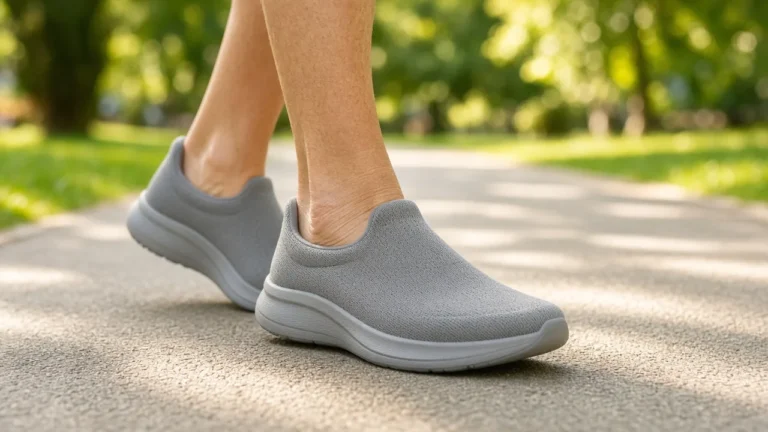
A frequent question from adult children is whether step-in shoes can take a parent’s orthotic. Some can. Because slip-ons hold the foot with the heel and upper rather than laces, an insert can make them feel looser at the heel or tighter across the top. Look for a removable insole, try the shoe with the insert in, and walk a few turns before you keep it. Hook-and-loop straps are often easier to adjust around an insert than a fixed slip-on. See our guides to hands-free slip-on walking shoes and Velcro walking shoes.
What our brand guides say about removable insoles
Insole details change by model and year, so treat this as a starting point and confirm on the exact product page. This is drawn from our own brand guides, not a ranking.
| Brand | What our guide notes | What to check |
|---|---|---|
| Orthofeet | A walking-focused specialist built around wide and deep toe boxes and removable orthotic-style insoles, with several widths. | Width menu for your size, and whether you prefer lace, strap or hands-free entry. |
| Skechers | Removable Arch Fit or Goga Mat footbeds on core lines; orthotic-friendly where the shoe has enough volume. | That the exact model’s footbed is removable, and heel hold on Slip-ins with your insert in. |
| Hoka | Orthotic-friendliness depends on whether the sockliner lifts out, and it can vary by model. | Sockliner removability on the exact model. |
| New Balance | Our guide notes that New Balance does not clearly state insole removability for the 1080v15. | Ask the retailer or brand before you order that model for an orthotic. |
| Merrell | Our guide lists a removable footbed on the Moab Speed 2 and a removable EVA footbed on the men’s Jungle Moc. | Depth over the top of the foot with your insert in. |
Buying for a parent who wears orthotics
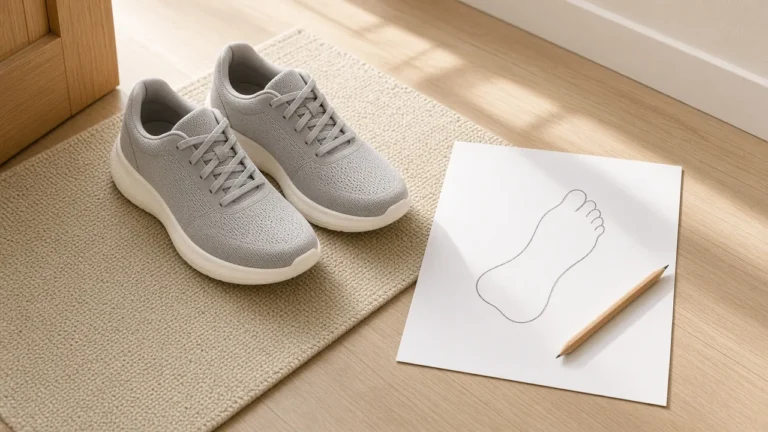
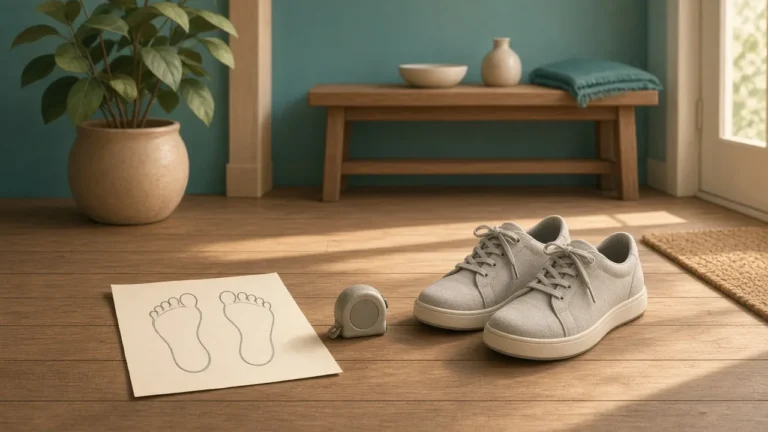
If you are shopping for a mum or dad, ask them to send or bring the orthotic, not just their size. Trace both their feet, note which foot is larger, and order from a shop with easy returns so they can try the shoes at home with the insert in. Our guide to buying walking shoes for a parent has a printable measuring card and a try-at-home checklist.
Related tools and guides
- Shoe Fit Checker — Quick check on length, width and heel hold.
- High arch walking shoes — Insole and lacing tips for a tall instep.
- Walking shoes for sore feet and heels — Heel cushioning, firm heel counters and an end-of-day comfort check.
- Narrow heel, wide forefoot — When the heel slips but the front is tight.
- Walking shoes for wide feet — Brands with Wide and Extra Wide.
- Why a new pair fits differently — Re-check every new pair, with your insert in.
- Fit guide · Walking shoes hub · All guides by category · All free tools
FAQ
What kind of walking shoes work best with orthotics?
Look for a removable insole, enough depth so the top of your foot is not pressed, a firm heel cup that holds your heel down, and a closure you can adjust, such as laces or straps. Width matters too. The best test is trying the shoe with your own orthotic in it.
Should I size up for orthotics?
Not automatically. Some people need a little more length or width with an insert, but going up a full size can make the heel slip. First take out the shoe’s own insole and put your orthotic in its place. If the fit is still tight, compare a wider version with a half size up before you decide.
Do I take out the original insole when I use an orthotic?
Usually, yes, for a full-length orthotic or insole, so it takes the original’s place instead of sitting on top. A three-quarter or heel-only insert often sits on top of the shoe’s insole. Follow the advice of whoever made or sold your insert.
Can I wear orthotics in slip-on or hands-free shoes?
Some people do. Slip-ons hold the foot with the heel and upper rather than laces, so an insert can make them looser at the heel or tighter across the top. Look for a removable insole, try the shoe with your insert in, and walk a few turns before you keep it.
How do I know if a shoe’s insole is removable when buying online?
Check the product page for the words removable insole, removable footbed, or removable sockliner. If it is not stated, ask the retailer or brand, and buy from a shop with an easy return policy so you can check the fit with your insert at home.
Health note: General footwear information only, not medical advice. Shoes 50+ does not diagnose or treat foot conditions, and does not give orthotic advice. If you have foot pain, balance concerns, numbness, swelling, diabetes, or circulation concerns, please consult a qualified healthcare professional, such as your doctor or a podiatrist, and ask whoever prescribed your orthotic which shoes suit it.