Looking for velcro walking shoes for adults over 50? Hook-and-loop straps (Velcro is the best-known brand name) are one of the easiest closures to live with: you can tighten or loosen them in a second, re-adjust as your feet feel fuller later in the day, and skip lace tying altogether. This guide explains how strap walking shoes compare with laces and hands-free slip-ins, what to check so a strap shoe still holds your heel on a real walk, and how to look after the straps. There is also a free 3-tap Strap Shoe Check you can copy or share. It is general footwear information, not medical advice; confirm current models and widths on each brand’s official site.
Not sure which shoe type suits you yet? The free Shoe Type Finder takes about 2 minutes. If you would rather not fasten anything at all, compare our hands-free slip-on walking shoes guide; for broader comfort and activity notes, start at the walking shoes hub.
What “velcro” walking shoes are
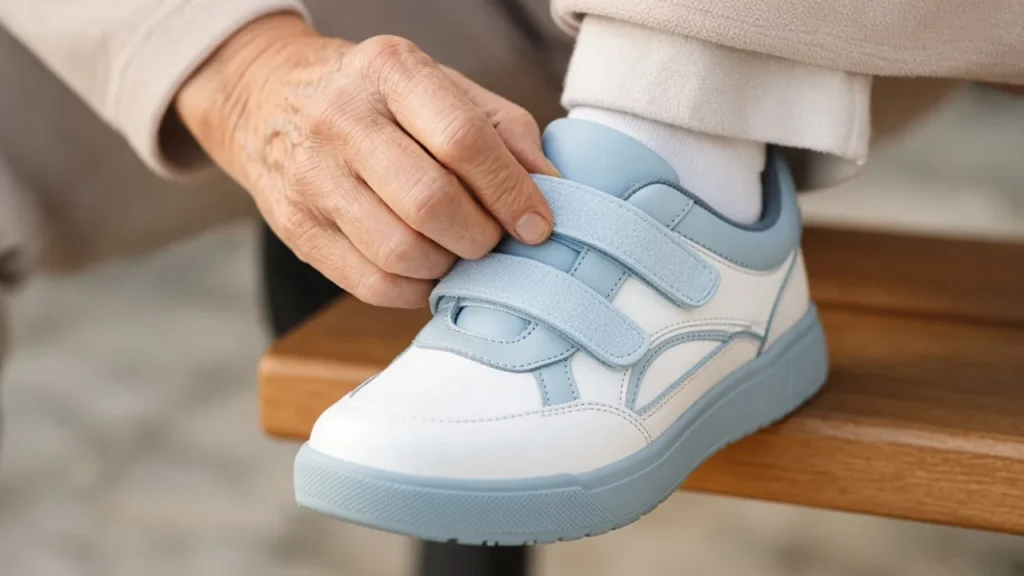
In shoe listings you will usually see “hook-and-loop”, “strap”, or “adjustable closure” rather than “Velcro”. They all describe the same idea: one side of the strap carries tiny hooks, the other soft loops, and they grip when pressed together. Common layouts include:
- Two or three straps across the top — The classic walking-shoe layout. More straps usually means you can set the forefoot and the area nearer the ankle a little differently.
- One wide strap — Quicker still, with fewer adjustment points. Common on casual and Mary Jane-style comfort shoes.
- Strap plus stretch laces — Elastic or no-tie laces set the general fit, and a strap on top snugs it down.
- Side or heel straps — Some designs open wide at the side or back for easier entry, then close with a strap.
Who often prefers hook-and-loop walking shoes
- People who find lace tying fiddly, slow, or a chore first thing in the morning, but still want to adjust the fit.
- Walkers whose feet feel fuller by the afternoon or on travel days and like to loosen the top without re-lacing.
- Anyone who wants a quick on-and-off shoe for errands, appointments, or the garden that still feels more “fastened” than a slip-on.
- Adult children shopping for a parent who wants an easy closure that is simple to check at a glance.
Hook-and-loop is a preference, not a rule. Many adults over 50 keep a strap or hands-free pair for quick trips and a lace-up pair for longer walks.
Velcro vs laces vs hands-free slip-ins
| What you care about | Hook-and-loop straps | Traditional laces | Hands-free slip-ins |
|---|---|---|---|
| Getting them on | Quick: open the straps, step in, press closed. | Slowest; tying or retying each time unless you leave them tied. | Fastest when the heel design works for you; no hands needed. |
| Adjusting during the day | Very easy to loosen or snug in seconds. | Most precise, but means retying. | Little or no adjustment; the fit is mostly fixed. |
| Fine-tuning the fit | Good, in two or three zones (one per strap). | Best; every eyelet can be set differently. | Limited; relies on the shoe’s shape and stretch. |
| Heel hold on brisk walks | Good when the straps sit well and the heel counter fits. | Usually the most dependable, especially with a heel-lock lacing. | Varies by design; worth a careful walk test. |
| Over time | Hooks collect lint and can grip less; the strap is a wear part. | Laces are cheap and easy to replace. | Heel structure can soften with heavy use. |
Free Strap Shoe Check
Answer three quick questions to get a short, personal strap shoe plan with what to look for and where to go next on Shoes 50+. Nothing is saved or sent anywhere; copy your plan into a note for your next shoe shop, or share it with someone who helps you shop.
My strap shoe check
Pick one answer for each question, then tap Show my plan.
Free from Shoes 50+. General footwear tips only, not medical advice.
What to check before you buy a strap walking shoe
Strap reach: room to tighten and to loosen
Close each strap as snug as you would wear it, then as loose. At both settings the hook side should still land fully on the loop side. If a strap barely catches when loosened, the shoe may feel tight on days your feet feel fuller; if it runs out of loop when snugged, it may never feel secure. This one check is the most useful thing you can do in a store or at home with a new pair.
Heel hold on a short walk
Fasten the strap nearest the ankle first, then the others. Walk for a few minutes, including a turn and a step up. A little heel movement is normal; a heel that lifts on every step means the size, width, or heel shape is not right for you, and tightening the straps harder usually just adds pressure on top. The Shoe Fit Checker walks through what to change next.
Where the straps sit
Straps press in a few fixed places instead of spreading the pull along a row of eyelets. Check that each strap is padded underneath, that the edges do not dig in when you flex your foot, and that a strap does not land right on a spot that is already sensitive. If laced shoes have felt tight across the top of your foot, a strap shoe set a little looser there may feel kinder; try it before you assume.
Width and depth
Straps let you adjust how snug the top of the shoe feels, but they do not make the sole wider. Standing, aim for about a thumb’s width of room beyond your longest toe. If the length is right but the forefoot feels squeezed, look for a marked wide or extra-wide version in your usual length rather than going longer. The Wide Shoe Finder and our walking shoes for wide feet guide explain the difference. If you use your own insoles, check that the shoe’s insole is removable and that the straps still close comfortably with your insert in.
Outsole grip for your usual surfaces
Some strap shoes are built as walking shoes; others are casual or house-style shoes with a flatter, smoother sole. Read the product details, and match the tread to where you actually walk: sidewalks and paths, smooth mall floors, or mostly indoors.
Looking after hook-and-loop straps
- Clear the hooks now and then — Lint, hair, and grass build up in the hook side and weaken the grip. A stiff old toothbrush or a fine comb lifts most of it out.
- Close the straps before cleaning — Pressed shut, the hooks pick up less fluff and do not snag laces, socks, or other clothes. Follow the brand’s care instructions for washing.
- Know when the strap is worn out — If a strap pops open on a walk, has to be pressed hard to stay shut, or the edges have frayed, the closure is no longer doing its job. A shoe repairer can sometimes replace straps; otherwise it may be time for a new pair.
Cushioning can wear out before the straps do. The Shoe Replacement Checker takes about a minute.
Brand starting points to investigate
These are research starting points, not ranked picks or test results. Strap styles come and go quickly, so always confirm the current model, closure, and widths on the official brand site.
- New Balance — The official New Balance site lists a Hook and Loop Leather 928v3, which New Balance describes as a walking shoe with motion-control and stability features and ABZORB cushioning. Colors, widths, and availability vary by region. Official New Balance site.
- Orthofeet — Our Orthofeet guide notes adjustable-strap styles alongside hands-free and stretch-lace designs, and the brand’s own site groups hook-and-loop strap shoes as a category. Many are casual comfort styles, so check whether the one you like is built for walking. Official Orthofeet site.
- Skechers — Our Skechers guide notes hook-and-loop styles as well as Slip-ins and laces. Strap closures appear on both sneakers and sandals there, so check the product type and the heel fit. Official Skechers site.
Most running-style brands in our directory, such as Brooks, Hoka, ASICS, and Saucony, focus on laced shoes, so they are better starting points if you decide laces or elastic no-tie laces suit you after all. Browse the full brands index or the shoe directory for more.
Related tools and guides
- Shoe Type Finder — Find your shoe type in about 2 minutes.
- Shoe Fit Checker — Heel slip, cramped toes, and pressure points.
- Wide Shoe Finder — When forefoot room is the recurring issue.
- Shoe Replacement Checker — Is your pair still giving you cushion?
- Hands-free slip-on walking shoes — For when you would rather not fasten anything.
- Fit and buying guide — Closures, length, and when to replace.
- Walking shoes hub · Mall walking shoes · Travel walking shoes · All free tools
FAQ
Are velcro walking shoes as secure as lace-ups?
They can feel very secure when the size, width, and heel shape suit you and the straps have enough reach. Laces still allow the finest adjustment, which is why some people keep a lace-up pair for long or brisk walks and a strap pair for everyday convenience. Judge it on a real walk, not just standing.
Velcro or hands-free slip-ins: which is easier?
Hands-free slip-ins are usually the quickest to step into, with no hands needed. Hook-and-loop takes a few seconds more but lets you loosen and snug the fit during the day. If adjustability matters, straps tend to win; if bending or fastening at all is the main hurdle, compare our hands-free slip-on guide.
Do velcro walking shoes come in wide widths?
Some do. Width options depend on the brand and the exact model, so check the width menu on the official product page. Remember that straps change how snug the top feels, not how wide the sole is; if your forefoot is squeezed, a marked wide size is the fix to look for.
My straps keep coming undone. What can I do?
First clean the hook side; built-up lint is the usual cause. Make sure the hook and loop overlap fully when closed. If the strap still pops open, it is likely worn, or the shoe may be too roomy for you so the straps are pulled to their limit. A repairer may be able to replace the strap, or it may be time to compare a new pair.
Health note: General footwear information only, not medical advice. If you have ongoing foot pain, swelling, numbness, or balance concerns, talk with a qualified clinician about what footwear suits you.