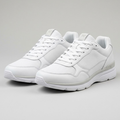
Welcome to the Shoes 50+ shoe directory — a free starting point for adults 50+ who want comfortable, practical shoes for walking, light jogging, exercise, and everyday movement. We do not sell shoes here. Use this hub to choose an activity category, compare brand guides, and check fit basics — then confirm current models and sizes on the brand or retailer page you prefer.
Traveling soon? Our travel walking shoes guide for sightseeing over 50 matches shoe types to city, cobblestone, flight, and cruise days, plus a free checklist.
Not sure which shoe type fits you?
Take the free Shoe Type Finder — about 2 minutes. A preference guide for adults 50+ (not medical advice).
Free shoe tools
Need a quick start? Use the Shoe Type Finder or the Shoe Fit Checker — or see both on one page.
Many people over 50 notice feet that feel wider later in the day, a need for more toe room, or a preference for secure heel hold and reliable grip. This directory is built around those real-world priorities — comfort, fit, and matching the shoe to how you actually move — without medical claims or hard sells.
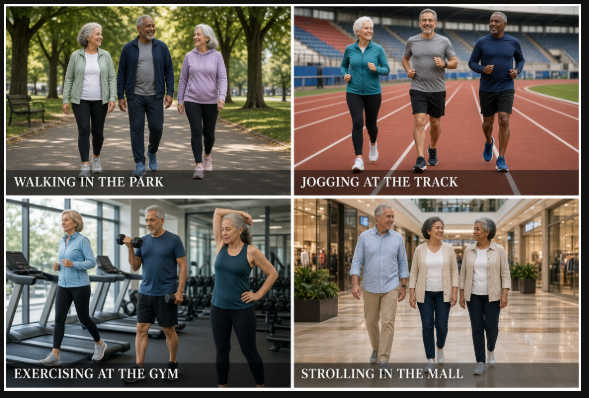
How to use this directory
- Pick your main activity — Start with walking shoes, jogging shoes, exercise shoes, or stability-focused shoes.
- Skim fit basics — Toe room, width, closures, and when to replace shoes are covered in the shoe fit & buying guide.
- Open one or two brand guides — Use the brands index or the brand links below for who each brand may suit.
- Confirm before you buy — Models, widths, and returns change; always check the brand or retailer listing for current details.
Browse by activity
Choose the hub that matches how you spend most of your active time. Overlap is normal — many people keep a walking pair and a separate gym or jog pair.
- Walking shoes — Daily walks, errands, travel, and steady outdoor movement. Prioritize all-day comfort, toe room, and outsole grip for the surfaces you use.
- Jogging shoes — Short easy jogs and brisk fitness walks. More impact cushioning and heel hold than a casual lifestyle sneaker.
- Exercise shoes — Gym, classes, strength work, and home workouts. A more planted, predictable base often feels better than a very tall soft road stack.
- Stability-focused shoes — For shoppers comparing a more guided or planted feel. This is a footwear comparison category — not a medical prescription.
Choosing by activity and fit
A quick way to narrow options:
- Mostly neighborhood or travel walking → start with walking shoes, then check widths and closures in the fit guide.
- Short jogs mixed with walking → compare jogging shoes; if you rarely jog, a good walking shoe may be enough.
- Classes, machines, or strength work → see exercise shoes for a steadier underfoot feel.
- Wanting a more guided / planted feel → browse stability-focused shoes, then confirm what feels right on your feet.
- Hard-to-fit feet (width, swelling, easy entry) → start with fit notes on brand pages and the fit guide, not a single “best shoe” list.
These are comfort and fit comparisons — not medical treatment. For persistent foot pain, numbness, or balance concerns, talk with a qualified clinician.
Featured brands
Each brand guide summarizes strengths and who the brand may suit. They are not ranked “best of” lists. Confirm current models and sizes before you buy.
- Orthofeet — Stretch uppers, roomy/deep toe boxes, and easy-entry walkers often considered for hard-to-fit feet.
- Skechers — Mainstream walking and easy-entry lines many adults use for daily comfort and light activity.
- Brooks — Specialty walking and running DNA many adults 50+ trust for brisk walking and light jogging.
- Hoka — Cushioned options for pavement miles when soft landings are a priority; check that the model still feels steady for your activity.
- New Balance — Wide width menus and everyday trainers useful for walking, gym, and mixed use.
- ASICS — Stability (Kayano) and cushion daily trainers (Nimbus, Cumulus), with Wide and Extra Wide on select models.
- Saucony — Guide stability, Triumph cushion, and Ride daily trainers in Wide; Guide also in Extra Wide.
- Merrell — Outdoor brand: Moab 3 hiking shoes for uneven ground, Jungle Moc slip-ons, and Wide (no Extra Wide) on many core models.
- Clarks — Comfort brand: Pace walking shoes (Clarks says Pace runs small, half size up), soft Cloudsteppers, easy-on toggle and bungee laces, and Wide (no Extra Wide found) on many styles.
- Altra — Roomy FootShape toe box and zero-drop (or 4mm) soles: Torin 9 and Torin ST for everyday walks, Wide (2E) on select models, no Extra Wide.
See the full brands index for short blurbs. More brand guides can be linked here as they go live.
Fit and buying basics
- Try shoes later in the day, when feet are often largest.
- Leave roughly a thumb’s width beyond your longest toe when standing.
- Check midfoot and heel hold — slip on every step usually means another size, width, or closure.
- Match cushion and grip to your surfaces (sidewalk, mall floors, gym).
- Replace shoes when the midsole feels “dead,” the outsole is worn smooth, or new hot spots appear.
Full checklist: Shoe Fit & Buying Guide — what to look for in comfortable shoes, including toe room, cushioning, support, sole, and grip.
Browse by category
Prefer to browse by topic? Every guide is grouped into seven categories on Shoe Guides by Category. New guides appear in each category archive:
- Walking Shoes — Everyday and longer walks: comfort, cushioning and fit. New Walking Shoes guides
- Stability & Support — For a steadier, more supportive feel underfoot. New Stability & Support guides
- Wide & Comfort Fit — More room in the toes and forefoot, and fit tips. New Wide & Comfort Fit guides
- Easy-On & Slip-On — Hands-free, slip-on and strap shoes. New Easy-On & Slip-On guides
- Travel & Everyday — Sightseeing, errands and all-day wear. New Travel & Everyday guides
- Gentle Exercise & Gym — Treadmill, gym, classes and light jogging. New Gentle Exercise & Gym guides
- Brand Comparisons — Side-by-side brand guides and brand starting points. New Brand Comparisons guides
Frequently asked questions
Where should I start if I only want one pair?
Most adults 50+ doing daily movement start with walking shoes. Add a jogging or exercise pair only if those activities are a regular part of your week.
Do I need stability shoes?
Not automatically. Many people do well in neutral walking or exercise shoes that simply feel secure. Stability-oriented models are one option to compare — see stability-focused shoes. Follow clinician guidance for foot or balance concerns.
Can running shoes work for walking?
Often yes for pavement walking, especially cushioned models. For all-day errands some people prefer a walking-oriented fit and flex. Compare notes on the walking and jogging hubs.
How should shoes fit after 50?
Secure midfoot and heel, enough toe room to wriggle your toes, and a width that does not squeeze the forefoot later in the day. Details are in the fit guide.
Does Shoes 50+ sell shoes?
No. This is an information directory. We help you compare categories and brands; purchases happen on brand or retailer sites you choose.
Is there a free shoe finder or shoes guide with no signup?
Yes. Our Shoe Type Finder is a short free quiz that points you toward walking, stability, cushion, or easy-on styles based on how you move. The Tools page lists every free guide on Shoes 50+, including fit and replacement checkers. No email signup is required. Shoes 50+ is not affiliated with any shoe brand. These are preference guides only, not medical advice.
How do I use this brand directory to choose shoes over 50?
Start with your main activity on the walking, jogging, exercise, or stability hubs, then open one or two brand guides from the brands index. Each guide summarizes who the brand may suit. Confirm current models and widths on the brand or retailer site you prefer. If foot pain or balance is a concern, please see a healthcare professional.
What shoes should I get if I am over 50 and not sure where to start?
Most adults 50+ who walk daily begin with a comfortable walking shoe, then add other pairs only if jogging or exercise is regular. Use the Shoe Type Finder for a quick match, skim the fit guide for toe room and width, and browse the featured brands on this page. Try shoes on late in the day when feet are largest.
Next steps
- Open the activity hub that matches your week: walking, jogging, exercise, or stability.
- Read the fit & buying guide if length, width, or closures are unclear.
- Skim one or two guides on the brands index (Orthofeet, Skechers, Brooks, Hoka, New Balance, ASICS, Saucony, Merrell, Clarks, Altra).
- Confirm current models, widths, and returns before you buy.
Health note: General information only – not medical advice. Talk with a clinician if you have foot pain, balance concerns, or questions about exercise.