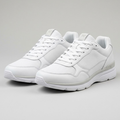
Shopping for shoes with a narrow heel and wide forefoot, over 50? It is one of the most common fit puzzles: a shoe that gives your toes and the ball of your foot enough room feels loose at the back, and a shoe that holds your heel squeezes up front. Sizing up or going wide often fixes one end and makes the other worse. This guide explains why that happens, the order to check fit in, lacing and shoe features that help, and a free 3-tap Heel and Forefoot Fit Check you can copy or share. It is general footwear information, not medical advice; confirm current models and widths on each brand’s official site.
If width is your only issue, start with our walking shoes for wide feet guide or the Wide Shoe Finder. If heel slip is the only issue, the Shoe Fit Checker covers it. This page is for when you have both at once.
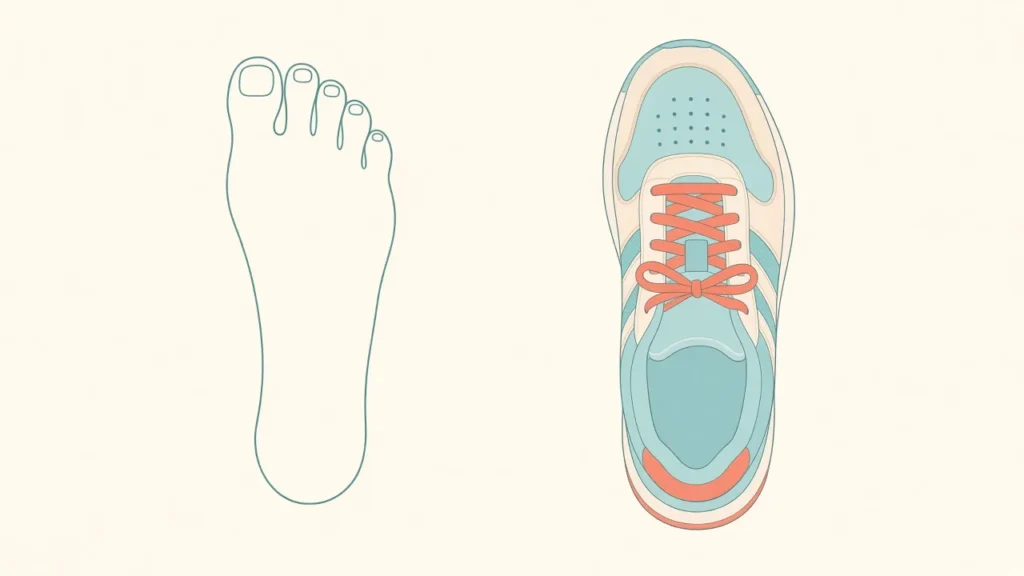
Why a wide forefoot and a narrow heel are hard to fit
Every shoe is built around a foot-shaped form called a last. A brand’s regular width has one ratio between heel and forefoot; on many shoes, the wide version is wider almost all the way through, heel included. If your forefoot is broader than average but your heel is not, the regular width can pinch up front while the wide width leaves the heel loose. Going a half size longer has a similar effect: more room at the toes, but the heel sits further from where the shoe expects it and can lift.
Feet can also change over time. Many people notice a broader forefoot or more end-of-day fullness after 50 while the heel stays much the same, so a size that worked ten years ago may not now.
Signs this is your fit pattern
- Your heel lifts or slides when you walk, but the toes and the ball of the foot feel tight or rub on the sides.
- You went wide or a half size up for toe room, and now the heel slips or blisters at the back.
- You pull the top laces very tight to stop heel slip, and the top of your foot ends up sore.
- The upper bulges over your little toe or the big-toe joint while the heel collar has a gap.
Check fit in this order: length, forefoot, then heel
| Step | What to check | If it is off |
|---|---|---|
| 1. Length | Standing, about a thumb’s width of room beyond your longest toe. | Fix length first. Too long makes heel slip worse; too short pinches no matter the width. |
| 2. Forefoot | The ball of the foot and toes feel held, not squeezed; no bulging over the little toe. | Try the next marked width in the same length, or a model with a rounder, roomier toe box. |
| 3. Heel | On a short walk, the heel moves a little at most; no rubbing at the back. | Try heel-lock lacing, a firmer or more padded heel collar, or another model before going narrower up front. |
The key idea: get the forefoot comfortable first, because you cannot add room up front with laces. Heel hold is easier to fine-tune afterward.
Free Heel and Forefoot Fit Check
Answer three quick questions to get a short, personal fit plan with what to try next and where to go on Shoes 50+. Nothing is saved or sent anywhere; copy your plan into a note for your next shoe shop or share it with someone who helps you shop.
My heel and forefoot fit check
Pick one answer for each question, then tap Show my plan.
Free from Shoes 50+. General footwear tips only, not medical advice.
Lacing that helps both ends
Heel-lock (runner’s loop) at the top
Most walking and running shoes have one extra eyelet near the ankle that often goes unused. Thread each lace up into the extra eyelet on the same side to make a small loop, cross the laces, and pass each one through the opposite loop before tying. Snug it gently. This holds the heel back in the heel cup without cranking the whole shoe tight. The Shoe Fit Checker suggests the same move for heel slip.
Relaxed lacing over the forefoot
Keep the lower crossings over the toes and the ball of the foot looser than the top ones. Some people skip the first crossing entirely, starting the laces one eyelet higher, so the front of the shoe can spread a little. If one spot on top of the foot gets pressure, leaving a single crossing out at that spot (sometimes called window lacing) can ease it.
Two zones, one shoe
The goal is a relaxed front and a snug back. Shoes with laces or two or more straps let you set the zones separately; most slip-ons and stretch shoes do not. If you prefer easy closures, our velcro walking shoes guide explains how to set strap shoes in zones, and the hands-free slip-on guide covers how to judge heel hold on step-in designs.
Shoe features to look for
- A rounder, roomier toe box — Toe box shape matters as much as the width letter. A rounded or foot-shaped front can give the forefoot room even in a regular width.
- A firm heel counter — The stiff cup around the back of the heel. Squeeze it: a firmer counter usually holds the heel better than a very soft one.
- A padded, shaped heel collar — Padding that hugs the back of the ankle helps a narrower heel feel held.
- A softer or stretch upper up front — Knit or stretch panels over the forefoot can ease side pressure, as long as the heel area is still structured.
- A removable insole — Lets you try a different insole thickness to fine-tune volume. Some brands include thin fitting spacers for this.
- More than one width on the same model — So you can compare regular and wide side by side in the same length.
Small add-ons such as adhesive heel grips or a thin extra insole can take up a bit of space at the back, but they work best on a shoe that already nearly fits. They will not fix a shoe that is the wrong length or far too wide.
How to test a pair at home or in a store
- Try shoes later in the day, in the socks you actually walk in.
- Check length standing. If two widths of the same model are available, put the regular on one foot and the wide on the other.
- Lace the forefoot relaxed and the top with a heel-lock, then walk for a few minutes, including a turn, a step up, and a gentle slope if you can.
- Note which end bothers you first. If the forefoot is comfortable and the heel only moves a little, that is usually a good sign.
- Keep tags and the box until you have walked in them indoors for a while.
Brand starting points to investigate
Lasts differ from brand to brand and even model to model, so the best tip is to compare more than one brand’s regular and wide widths. These guides in our directory are starting points, not ranked picks or test results.
- Orthofeet — Our guide covers its wide and deep toe boxes and multiple widths; the brand’s own site says many of its shoes come with removable fitting spacers meant to fine-tune a loose fit or heel slip. Official Orthofeet site.
- New Balance — Our guide covers its width codes, with some lines offered from narrow to extra-wide, which makes side-by-side width comparisons easier. Official New Balance site.
- ASICS, Saucony, Brooks, and Hoka — Laced shoes with wide options on selected models (see each guide), which suit heel-lock lacing.
Browse the full brands index or the shoe directory. Always confirm current models, widths, and fit notes on the official brand site before you buy.
Related tools and guides
- Shoe Fit Checker — Heel slip, cramped toes, and pressure points, one at a time.
- Wide Shoe Finder — Do you need wide, extra-wide, or just a different shape?
- Walking shoes for wide feet — Width labels, mistakes to avoid, and wide vs longer.
- Roomy toe box walking shoes — Toe box shape vs wide width, long second toe, and bunion room.
- Fit and buying guide — Length, width, closures, and when to replace.
- Shoe Type Finder — Find your shoe type in about 2 minutes.
- Walking shoes hub · Stability shoes hub · All free tools
FAQ
Should I size up if my forefoot is wide but my heel is narrow?
Usually not. A longer size adds room at the toes but tends to make heel slip worse. Keep your measured length and look for a wider width or a roomier toe box in that length, then fine-tune the heel with lacing.
Wide width fits my toes but my heel slips. What now?
Try a heel-lock lace first; it often solves mild slip. Then compare a firmer heel counter or a more padded collar, or another brand’s wide width, since some are roomier at the front without being as loose at the back.
Do thicker socks help?
A thicker sock fills the whole shoe, including the forefoot that is already snug, so it rarely helps this pattern. Lacing, heel shape, and choosing the right width usually work better.
Can slip-on shoes work for a narrow heel?
Some do, especially designs with a structured, shaped heel. Walk-test them carefully; if the heel lifts on most steps, a laced or strap shoe gives you a way to snug the back.
Health note: General footwear information only, not medical advice. If you have a sore spot that does not settle, bunions or toe changes that are getting worse, numbness, or balance concerns, talk with a qualified clinician about what footwear suits you.