New Pair, Same Size, Different Fit? How to Re-Check Every New Pair After 50
You buy the same walking shoe you have worn for years, in the same size, and the new pair feels tighter, looser, or rubs somewhere new. You are not imagining it, and you are not alone. On forums for people over 50, long-time buyers regularly ask why a new pair of the same shoes fits differently, and many say they only found out after the return window closed.
This guide explains the usual reasons, shares what other walkers report, and gives you a simple routine to re-check every new pair before you wear it outside. Use the free 4-tap New Pair Fit Re-Check for a personal next step. It is practical footwear help for adults over 50, not medical advice.
Why the same size can feel different in a new pair
There is rarely one clear cause, and a brand label alone will not tell you which one applies. These are the common possibilities to rule in or out:
- The model was updated. Many popular walking and running shoes are updated regularly, often shown by a new number or letter after the name. A newer version can use a different upper, foam, or shape, so the same size may not feel the same.
- A different variant or colour. Waterproof, lined, leather, knit, and mesh versions of one shoe can feel different, and some buyers notice small differences between colourways. Compare like with like.
- Pair-to-pair variation. Many shoes are partly assembled by hand, and leather and fabric vary. Two pairs with the same label can feel slightly different, even from the same shop.
- Your old pair has moulded to you. A worn-in pair has softened and stretched where your foot presses. A new pair starts firmer, so the comparison is not quite fair.
- Your feet may have changed. Many adults find their feet get a little longer or wider over the years, and feet often feel fuller later in the day. A size that fitted five years ago is worth re-measuring.
- Socks and insoles. A thicker sock, a new insole, or an orthotic moved from the old pair can take up room and change the fit on its own.
We can’t tell you which of these applies to a specific shoe. Brands do not always explain what changed between versions, and we only say a brand changed a shoe when the brand says so.
What 50+ walkers report
These are personal experiences shared in public forums, summarised in our words. They are not measurements, and the brands involved have not confirmed changes in the posts we read.
- On the Early Retirement forum (August 2026), a poster bought the replacement model number of their favourite New Balance walking shoe in the same size and found it too tight in the toe area, so they kept wearing the old pair. Another poster felt a Merrell slip-on came out slightly smaller after what they believed was a manufacturing change. Others said newer versions of a favourite shoe often don’t fit quite the same.
- On Gransnet, a long-time Hotter buyer found three newer pairs in her usual size far tighter to get on than her older pairs. Other members had the opposite experience: one now fits a half size smaller in a wide fitting, and another found sizes inconsistent between pairs.
- On the Camino de Santiago forum, a long-time Merrell Moab 3 Mid Wide buyer felt a newer pair was a little snugger and urged others to double-check sizing. In another thread, one walker said a new pair of the same model and size of KEEN boots gave a blister, and another went up a full size after decades in the same size. Replies also pointed out that sock thickness can make a real difference.
- In the r/Hoka community (March 2026), several long-time Bondi wearers said the Bondi 9 felt narrower than the Bondi 8 in the same size and width, while one reply said they liked the snugger fit. Another r/Hoka thread reported pairs of the same model fitting differently and advised trying the exact pair on in person.
The common thread is not that one brand is better than another. It is that experienced buyers stopped assuming a repeat purchase would fit, and started checking each new pair. Our brand guides for Merrell, Hoka and New Balance have more on each brand’s sizes and widths.
Free New Pair Fit Re-Check (4 taps)
Answer four quick questions about the new pair. You get a short result with four next steps and links to use next. Copy or share it with whoever does the shoe shopping in your house.
New Pair Fit Re-Check
Pick one answer for each question, then tap Show my re-check.
Free from Shoes 50+. General footwear guidance for adults over 50, not medical advice. Nothing is saved or sent.
How to re-check every new pair, step by step
This takes about 20 minutes and is worth doing even for a shoe you have bought many times. Do it indoors, before the shoes touch a pavement, so you can still return them if needed.
- Check the labels first. Compare the size, width letter, full model name and version number on the tongue label or box of the old and new pair. A different version or width is the quickest explanation.
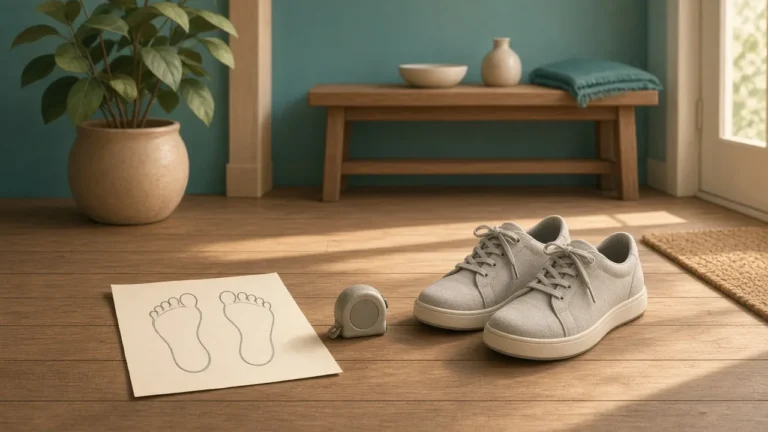
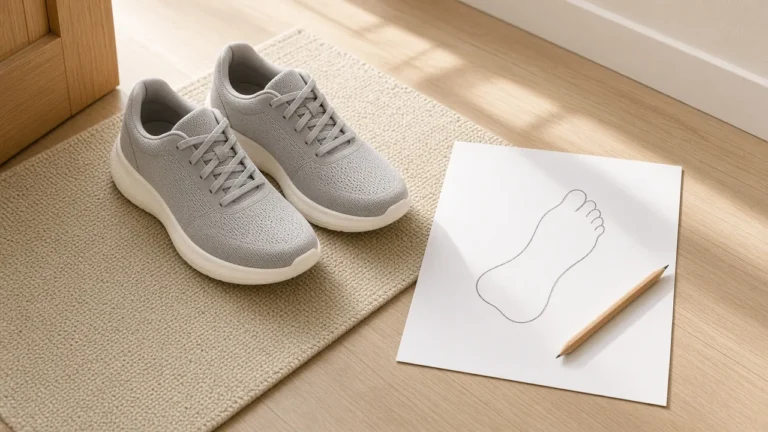
- Measure your feet again, later in the day. Stand on paper, heel against a wall, and mark your longest toe. Do both feet and shop for the larger one. Our fit guide shows how.
- Use your usual socks and insoles. Wear the socks you walk in. If you use your own insoles or orthotics, move them into the new pair before you judge it.
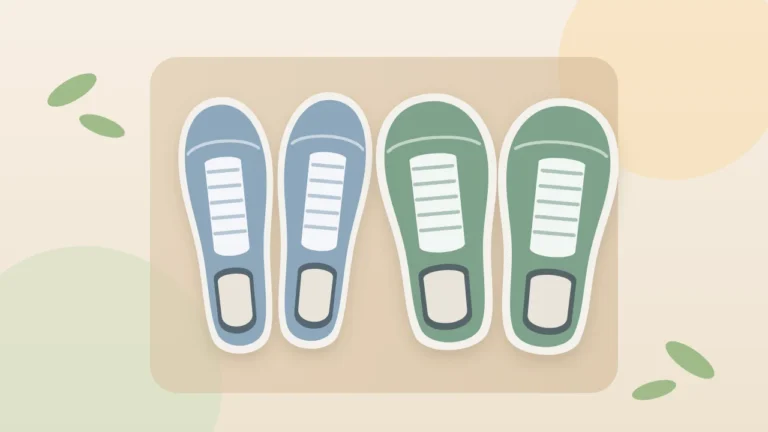
- Compare the pairs side by side. Take out both insoles and lay them heel to heel, then stand on the new one. If your foot spills over the edge, width may be the issue.
- Check toe room. Standing, you want about a thumb’s width beyond your longest toe and room to wiggle your toes. Nothing should press on the little toe or the top of the foot.
- Check heel slip. Lace snugly, then walk on a hard floor and up a step or two. A little movement is normal; a heel that lifts with every step is not.
- Walk indoors for 10 to 15 minutes. Hotspots, pinching or numbness in that time are a fit signal. Don’t count on breaking in a pair that presses from the start.
- Check the return or exchange window. Note the date and whether a width exchange is allowed. Some sellers do not swap widths, so read the policy before you wear the shoes outside.
- Write down what worked. Keep a note of the model, version, size and width that passed. It makes the next repeat order much easier.
If the new pair fails the re-check
- Tight across the toes or sides: try the wider width in your usual size before going a half size longer. Our Half Size vs Wide Check walks through it, and the Wide Shoe Finder lists brands with wider options.
- Heel lifts or foot slides: try snugger lacing, a half size down, or a model with a firmer heel. See narrow heel, wide forefoot shoes if your heel is narrow but your forefoot needs room.
- New rub or pressure point: use the Shoe Fit Checker to match the feeling to a likely fit cause.
- The new version just isn’t the same: look at a different model in the same brand, or another brand with similar features. Keep your old pair for shorter outings until you find a match, and check its wear with the Shoe Replacement Checker.
Who should be extra careful
A re-check helps everyone, but it matters most if:
- you buy the same model online every time without trying it on,
- your shoe size or width has shifted over the years, or your feet feel fuller later in the day,
- you have wide or high-volume feet, or you use your own insoles or orthotics,
- you are buying for a parent or partner who may not say a shoe feels wrong (see our guide to buying walking shoes for a parent over 50), or
- you have foot pain, numbness, swelling or balance concerns. In that case, talk with a qualified healthcare professional, such as a podiatrist or your doctor, before changing shoes.
Related tools and guides
- Shoe fit and buying guide: how walking shoes should fit after 50.
- Half Size Up vs Wide Width: a free check for when shoes feel tight.
- Shoe Fit Checker: match a fit problem to likely causes.
- Wide Shoe Finder: brands and widths to look at.
- Shoe Replacement Checker: is your old pair still worth wearing?
- One foot bigger, or feet that changed size after 50: measure both feet and fit the bigger one.
- Brand guides with sizing and width notes: Merrell, Hoka, New Balance, Brooks, Skechers, ASICS, Saucony, Orthofeet and Clarks.
- All free tools.
FAQ
Why does my new pair of the same shoes fit differently?
Common reasons include a model update, a different variant or colour, normal pair-to-pair variation, an old pair that has moulded to your foot, changes in your own feet over time, and different socks or insoles. Re-check the labels, measure your feet again later in the day, and compare the pairs side by side.
Should I size up if my new pair feels tight?
Not straight away. If the pressure is across the toes or sides, try the wider width in your usual size first, because going longer can let the heel slip. If your longest toe is touching the end, a half size longer may help. Re-check heel hold after any change. Our Half Size vs Wide Check walks you through it.
Will a tight new pair break in?
Some materials soften a little with wear, but a pair that pinches, rubs or causes numbness in a 10 to 15 minute indoor walk is a fit problem. If the return window is open, it is usually better to exchange it than to hope it breaks in.
Does a new version number mean the fit has changed?
Not always, but it can. A newer version may use a different upper, foam or shape. Treat it as a new shoe and re-check length, width and heel hold, even if you have worn earlier versions for years.
Can a new pair of shoes cause foot pain?
A poorly fitting pair can feel uncomfortable, but this guide cannot tell you the cause of foot pain. If you have foot pain, numbness, swelling or balance concerns, talk with a qualified healthcare professional.
Health note: General footwear information only, not medical advice. If you have foot pain, numbness, swelling, balance concerns or a medical condition, consult a qualified healthcare professional before changing your shoes or activity.
About this guide: Community reports above are summarised from public forum posts read on 20 October 2026 and are individual experiences, not test results. We have not wear-tested these shoes.
Directory note: Shoes 50+ is a free shoe discovery site for adults over 50, not a store. We do not add buy buttons here.