One Foot Bigger, or Feet That Changed Size After 50? How to Fit Both Feet
Is one foot bigger than the other, or do shoes in your usual size suddenly feel tight? Both are very common after 50. Feet can get a little longer or wider over the years, and most people have one foot that is slightly larger. This guide shows how to measure both feet at home, how to fit the bigger foot and fine-tune the smaller one with lacing, socks and insoles, and when a wide width beats sizing up. There is also a free 4-tap Two-Feet Fit Check you can copy or share.
It is a footwear guide, not medical advice. Not sure what kind of shoe you need overall? Take the free Shoe Type Finder (about 2 minutes) or browse all free tools.
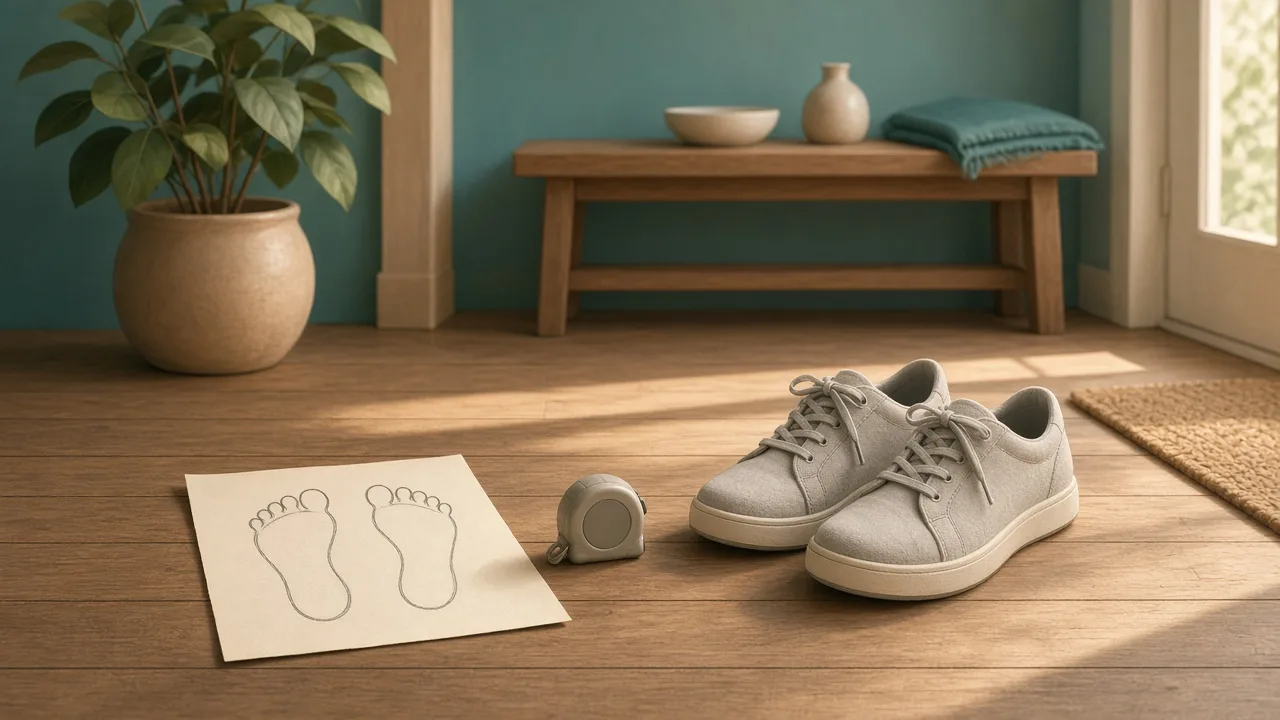
Quick answer: fit the bigger foot, then fine-tune the other
Measure both feet later in the day, standing, in the socks you will wear. Feet are usually a little fuller after a day of walking.
Buy for the larger foot. It needs toe room and no pressure on the sides. Harvard Health’s shoe tips say the same: if one foot is larger, buy a size that fits the larger foot.
Then fine-tune the smaller foot with snugger lacing, a slightly thicker sock or an insole, so its heel does not slip.
Re-measure once a year and with every new pair. The size you wore at 40 may not be your size now.
What people over 50 are asking
In late October 2026 we read what walkers were saying on X. Two stories stood out (paraphrased, personal reports only):
- A walker whose brand-new pair pinched one little toe, only on one side, because that foot is a bit bigger.
- A man who kept ordering the same size online for years, then got measured and found his feet had grown about two sizes.
These are personal experiences, not tests. They show why it pays to measure both feet, and to measure again every so often.
Why feet can change size after 50
Health sources explain it in simple terms. Cleveland Clinic says the ligaments and tendons that support the arch wear with use, so the arch slowly flattens and the foot gets a bit longer or wider, and weight gain can add to this (Cleveland Clinic). UCLA Health notes this often means a half size or more, and that many people keep buying the same size year after year without noticing (UCLA Health). Harvard Health adds that the padding under the feet thins with age, which can change how shoes feel (Harvard Health).
Having one foot slightly bigger is normal too. An NHS footwear page says most people have one foot slightly bigger than the other and calls a difference of about half a size normal (NHS footwear advice).
Free Two-Feet Fit Check (4 taps)
Answer four quick questions for a short plan: which foot to fit, whether to look at length or width, and how to fine-tune the other foot. Nothing is saved or sent anywhere.
My Two-Feet Fit Check
Pick one answer for each question, then tap Show my plan.
Free from Shoes 50+. A fit starting point, not medical advice. Shoe sizes vary between brands, so always try the actual shoe.
How to measure both feet at home
- Pick the right time. Measure in the afternoon or evening, after you have been on your feet. Feet are usually a little fuller then.
- Wear your usual socks. Use the socks you plan to wear with the shoes.
- Stand, do not sit. Stand on a sheet of paper with your weight on the foot being traced. Hold a counter or chair for balance, or ask someone to trace for you.
- Trace and mark. Mark the back of your heel and the tip of your longest toe (it may be your second toe), then the widest points on each side.
- Do the other foot. Use a fresh sheet and repeat. Write “left” and “right” on them.
- Compare. Measure heel-to-toe and across the widest part of each tracing. The larger tracing is the one to shop for. Harvard Health suggests placing a shoe on your tracing: if the shoe is narrower or shorter than the tracing, skip it.
In a store, ask for both feet to be measured, standing. Then go by how the shoe feels, not the number: sizes vary between brands.
Fit the bigger foot, then fine-tune the smaller one
Start with the shoe that fits your larger foot well: about a thumb width (roughly half an inch) in front of the longest toe, no pressure on the sides, and a heel that stays put when you walk. Then use these small tweaks on the smaller foot.
Lacing tweaks
- Bigger foot: lace a little looser across the top, or skip an eyelet over a pressure point, so the top does not press.
- Smaller foot: lace a little firmer and use heel-lock lacing (the extra top eyelet) so the heel does not slip. Our narrow heel, wide forefoot guide explains it.
- Straps: hook-and-loop straps and buckles can be set separately on each foot, which makes two-feet fitting easier. See Velcro walking shoes.
Socks and insoles
- Insole on the smaller side: NHS footwear advice says that with half a size or more between your feet, you may need an insole for the smaller foot. A shoe with a removable insole gives you more options.
- A slightly thicker sock on the smaller foot can take up a little space, as long as it does not crowd your toes.
- Using an orthotic? Try shoes with your orthotic in place. See walking shoes for orthotics.
The heel check
Walk for a few minutes on a hard floor in both shoes. Neither heel should lift or rub. If the smaller foot still slides after lacing and an insole, the gap between your feet may be too big for one size. Some people then try two different shoes in the store to compare, and pick the size that suits the bigger foot best.
Wide width or size up when your feet have changed?
When your usual size starts to feel tight, check where it presses before you size up. Toes at the end point to length. Pressure on the sides or the ball of the foot points to width. Harvard Health notes that buying a half size bigger, but not wider, won’t necessarily solve a tight fit across the ball of the foot. A longer size can also make your heel slip. Our free Half Size vs Wide Check walks you through it, and the Wide Shoe Finder shows brands with Wide and Extra Wide options. If only your toes feel squeezed, see roomy toe box walking shoes.
Re-measure once a year, and with every new pair
Cleveland Clinic advises getting fitted for new shoes every so often, because feet can and do change. A simple habit: measure both feet once a year, for example on your birthday, and again whenever you buy shoes. Even the same model can fit differently from pair to pair, so use our new pair fit re-check. If your shoes feel different because they are worn out rather than because your feet changed, try the Shoe Replacement Checker.
When to check with a professional
A slow change over years is common. But if one foot changes size suddenly, swells, stays puffy overnight, feels warm, painful or numb, or if you have diabetes or circulation concerns, please see your doctor or a podiatrist before relying on a shoe change. Shoes can make you more comfortable, but they do not explain why a foot has changed.
Related guides and tools
- Shoe fit and buying guide for adults 50+: the basics of length, width, closures and grip.
- Half size up vs wide width: a free 3-tap check for length vs width.
- New pair, same size, different fit?: how to re-check every new pair.
- Roomy toe box walking shoes: toe box shape vs wide width.
- Walking shoes for wide feet: width labels and brands with Wide and Extra Wide.
- Shoe Fit Checker · Wide Shoe Finder · Shoe Type Finder · All free tools
- Walking shoes hub · All guides by category · Brands index
FAQ
Is it normal to have one foot bigger than the other?
Yes. Many people have one foot a little longer or wider than the other, and NHS footwear advice notes that a difference of about half a size is normal. Measure both feet and fit your shoes to the larger one.
Which foot should I fit my shoes to?
Fit the larger or wider foot, so it has toe room and no pressure on the sides. Then fine-tune the smaller foot with lacing, a slightly thicker sock or an insole so its heel stays snug.
Why have my feet changed size after 50?
Health sources such as Cleveland Clinic and UCLA Health explain that the ligaments and tendons that hold up the arch slowly lose some spring, so the arch can flatten and the foot can get a bit longer or wider. Weight changes can add to this. That is why the size you wore years ago may no longer fit.
Should I size up or go wide if my shoes feel tighter now?
It depends on where it presses. If your toes touch the end, you may need more length. If the sides or the ball of the foot press, a wider width in your measured length usually helps more, because a longer size adds little width and can make your heel slip. The free Half Size vs Wide Check can help you decide.
How often should I measure my feet after 50?
Measure both feet at least once a year and every time you buy new shoes, later in the day and in the socks you plan to wear. If one foot suddenly changes size, swells or feels numb, check with a doctor or podiatrist rather than only changing shoes.
Health note: General footwear information only, not medical advice. Shoes 50+ does not diagnose or treat foot conditions. If you have foot pain, swelling, numbness, balance concerns, diabetes, or circulation concerns, or one foot has changed size suddenly, please consult a qualified healthcare professional, such as your doctor or a podiatrist, before relying on any shoe change.