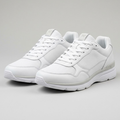
Looking for sidewalk walking shoes for adults over 50 with good grip? Neighborhood walks are rarely as smooth as a treadmill or a mall floor. Wet leaves in autumn, cracked or lifted slabs, curbs, driveway slopes, painted crossings that turn slick after rain, and gravel at the edge of the path all ask more of a shoe’s outsole and fit. This guide explains what to look for in tread and rubber, why a stable base and a secure heel matter, how to tell when the tread is worn, and a free 3-tap Sidewalk Grip Check you can copy or share. It is general footwear information, not medical advice and not a promise that any shoe prevents slips or falls; confirm current models on each brand’s official site.
New to choosing walking shoes? Start with the Shoe Type Finder or our walking shoes hub. If you mostly walk indoors, see mall walking shoes or treadmill walking shoes instead. This page is for everyday outdoor walks around the neighborhood.

What sidewalk walking asks of your shoes
A typical neighborhood loop mixes several surfaces in a few minutes. Each one tests a different part of the shoe:
- Wet leaves and damp patches — Test how well the rubber holds on a slick, uneven layer. Smooth, worn, or very hard soles tend to feel least sure here.
- Cracked or lifted pavement and tree roots — Test how steady the shoe feels when one side of the foot lands higher than the other. A broad, not-too-tall sole usually feels more planted.
- Curbs, ramps, and driveway slopes — Test heel hold and grip at the edge of the sole. A heel that lifts or a foot that slides forward is easy to notice on a downhill.
- Painted lines, metal covers, and smooth tiles — Can be slippery when wet, whatever you wear. Grip helps, but slowing down helps more.
- Gravel edges and grass — A little tread depth helps; deep trail lugs are rarely needed for town walking.
Outsole grip and tread: what to look for
| Feature | Why it matters on sidewalks | How to check |
|---|---|---|
| Rubber where you land and push off | Rubber under the heel and the ball of the foot usually grips and wears better than exposed foam. | Turn the shoe over. Look for rubber pads at the heel and forefoot, not just bare foam. |
| A varied tread pattern | Grooves running in more than one direction give the sole edges to bite on damp or gritty pavement. | Avoid a sole that looks almost smooth. Shallow, multi-direction grooves are plenty for town walks. |
| Broad, stable base | A wider sole and a not-too-tall stack can feel steadier on cracked slabs and curb edges. | Stand in the shoes and shift your weight side to side; they should not feel tippy. |
| Secure heel and midfoot | If your foot moves inside the shoe, even good tread feels less sure on slopes and turns. | Walk down a slope or step off a low step. The heel should stay put and toes should not jam forward. |
| Comfortable, steady cushioning | Pavement is hard. Cushioning helps comfort, but a very soft or very tall sole can feel less planted. | Compare a moderate and a plush pair on a hard floor and notice which feels steadier. |
Labels such as “slip-resistant” are usually written for work settings and are tested in different ways by different makers, so treat them as one clue, not a guarantee. For most neighborhood walking, a well-fitting walking shoe with real rubber and a visible tread pattern is the practical target.
Free Sidewalk Grip Check
Answer three quick questions to get a short plan for your neighborhood walks: what to look for in your next pair and where to go next on Shoes 50+. Nothing is saved or sent anywhere. Copy your plan into a note for your next shoe shop, or share it with a walking friend.
My sidewalk grip check
Pick one answer for each question, then tap Show my plan.
Free from Shoes 50+. General footwear tips only, not medical advice. If you feel unsteady or have had a fall, talk with your doctor.
Wet leaves, rain, and uneven pavement: practical tips
- Shorten your stride on slick patches — Smaller steps keep your weight over your feet. Walk around leaf piles and puddles when you can, because they can hide cracks and curbs.
- Watch the shiny surfaces — Painted crossings, metal covers, wooden boardwalks, and smooth tiles outside shops are often the slipperiest spots after rain.
- Look a few steps ahead — On uneven pavement, scanning ahead gives you time to choose your line. Familiar routes help in dim light.
- Use the curb ramp — Where there is a dropped curb or ramp, it is usually the easier way down. Step down with your whole foot rather than your toes.
- Dry shoes properly — Let wet shoes dry at room temperature with the insoles out, away from heaters, so the materials and fit hold up.
Fit for confident sidewalk walking
Grip only helps if your foot stays where the shoe expects it. A few fit checks matter more outdoors than on flat indoor floors:
- Heel hold — Your heel should not lift with each step. If it does, try a heel-lock lacing at the top eyelet; our narrow heel and wide forefoot guide shows how.
- Toe room without sliding — Leave about a thumb’s width beyond the longest toe, with a midfoot snug enough that toes do not jam forward on downhills.
- A closure you will actually fasten — Laces, straps, or a hands-free design can all work if the heel stays secure. Compare options in our velcro walking shoes and hands-free slip-on guides.
- Your walking socks — Try shoes on with the socks you walk in, later in the day when feet are slightly larger.
Not sure what is going wrong? The free Shoe Fit Checker covers heel slip, cramped toes, and pressure points, and the fit and buying guide covers length, width, and closures.
How to tell when your tread is worn out
Outdoor pavement wears an outsole faster than indoor floors. Turn your shoes over every month or so and look for:
- Smooth or shiny patches under the heel or the ball of the foot, where the grooves have faded.
- Foam showing through where rubber used to be.
- A sole worn much more on one edge, so the shoe tilts when you set it on a table.
- A shoe that used to feel sure on damp pavement now feeling slippery.
The free Shoe Replacement Checker walks you through these signs, along with cushioning and upper wear, in about a minute.
Do you need trail shoes for sidewalks?
Usually not. Trail shoes have deep lugs and stiffer soles built for dirt and rock, which can feel clunky on pavement. For town walking, a good walking shoe with rubber coverage and a visible tread pattern is the practical choice. If your loop regularly includes packed gravel or park paths, look for a walking shoe with slightly deeper grooves. If you split time between outdoor and indoor walking, our mall walking guide compares the two, and the walking vs running shoes guide explains how sole design differs.
Brand starting points to investigate
These guides in our directory are starting points, not ranked picks or test results. Tread and rubber vary by model, so check the outsole and walk-test before you decide.
- Orthofeet — Our guide notes high-traction outsoles on key walking models, along with cushioning, roomy toe boxes, and several widths. Official Orthofeet site.
- Skechers — Our guide notes a dual-density traction outsole on one of its core walking lines, plus easy-entry and wide options. Check heel hold if you choose a hands-free style for slopes and curbs. Official Skechers site.
- New Balance — Our guide covers its width codes and a structured stability option, useful if a secure, planted fit is your priority. Official New Balance site.
- Hoka and Brooks — Our guides cover cushioned shoes for long pavement walks. Our Hoka guide also notes that very tall stacks can feel less grounded, so compare heights if uneven pavement is your concern.
- ASICS and Saucony — Our guides cover stability-minded and cushioned road shoes with wide options for pavement miles.
Browse the full brands index or the shoe directory. Always confirm current models, outsoles, and fit notes on the official brand site before you buy.
Related tools and guides
- Shoe Type Finder — Find your shoe type in about 2 minutes.
- Shoe Replacement Checker — Is your tread or cushioning worn out?
- Shoe Fit Checker — Heel slip, cramped toes, and pressure points.
- Travel walking shoes — Cobblestones and city pavement on longer days.
- Walking shoes hub · Stability shoes hub · All free tools
FAQ
What kind of sole grips best on wet sidewalks?
In general, rubber with a varied tread pattern grips better than a smooth or worn sole or bare foam. No sole is grippy on every surface, so painted lines, metal covers, and wet leaves still call for slower, shorter steps.
Are thick, cushioned shoes good for uneven pavement?
Cushioning makes hard pavement more comfortable, but some walkers find a very tall, soft sole less steady on cracked slabs and curb edges. Compare a moderate-height shoe and a plush one and choose the one that feels more planted to you.
Are slip-on or hands-free shoes OK for neighborhood walks?
They can be, if the heel stays put on a slope and the outsole has real tread. Walk down a gentle slope and step off a curb in them before you decide; easy entry alone is not enough.
Do I need waterproof shoes for walking in the rain?
Not necessarily. A water-resistant upper keeps feet drier on damp mornings, but it can feel warmer. Grip comes from the outsole, not the upper, so check the tread either way.
Health note: General footwear information only, not medical advice. Shoes cannot prevent every slip or fall. If you have had a fall, often feel unsteady, have numbness in your feet, or are worried about your balance, talk with your doctor or a physical therapist, who can advise on footwear and other ways to walk with confidence.