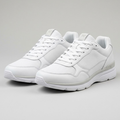
Shopping for shoes for treadmill walking, adults over 50? Treadmill walking is steady, predictable, and easy to fit into any week, whatever the weather. It also asks slightly different things of a shoe than a neighborhood loop: the same stride for many minutes, warmer feet indoors, and sometimes an incline. This guide helps you compare the comfort and fit features that matter on the belt, then gives you a free 3-tap Treadmill Shoe Check you can copy or share. It is general footwear information, not medical advice; confirm current models and widths on each brand’s official site.
Not sure which shoe type suits you yet? The free Shoe Type Finder takes about 2 minutes. If you also walk indoors at a mall or community center, see our mall walking shoes guide; for classes and weights, see exercise shoes.
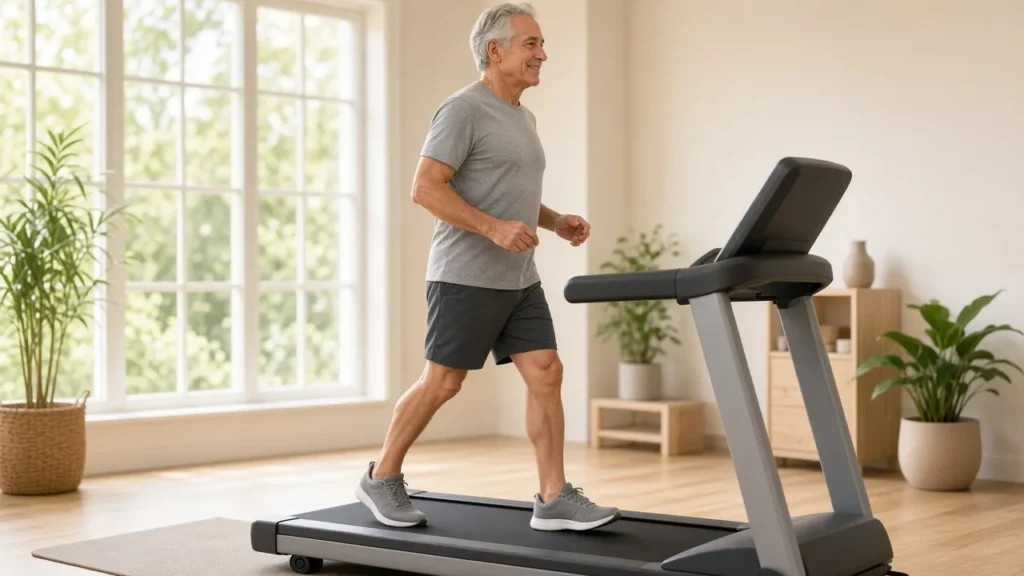
What treadmill walking asks of your shoes
- Cushion you still like at the end of a session — The belt is a smooth, even surface, so the main question is comfort over many identical steps. Some walkers prefer a softer feel, others a firmer, more connected one.
- A steady, not tippy, platform — Very tall, very soft shoes feel great to some people and a little wobbly to others, especially when stepping on and off the deck.
- Secure heel hold — Incline settings and brisk paces are where a loose heel shows up first.
- Breathable upper and a little toe room — Indoor sessions can feel warm, and many people find their feet feel fuller toward the end of a longer walk.
- A flexible, smooth-rolling feel — Walking strides roll from heel to toe; a shoe that bends and rolls comfortably at your pace usually feels more natural than a stiff one.
Treadmill vs outdoor walking: what changes for your shoes
| Factor | On the treadmill | Outdoors (sidewalks, paths) |
|---|---|---|
| Surface | Even and predictable; many walkers find the belt feels a little more forgiving than concrete, though machines vary. | Changes constantly: curbs, cracks, slopes, wet patches. |
| Grip and tread | Deep lugs are rarely needed; a smooth, full-contact rubber outsole is fine. | Grippy tread matters more on damp pavement and uneven ground. |
| Heat | Indoors with little airflow; a breathable upper and comfortable socks help. | Depends on weather; water resistance may matter more. |
| Incline | Often used on purpose; heel hold and toe room become more noticeable. | Hills come and go; downhill is where toes may press the front. |
| Wear | Outsoles may look almost new while the foam inside slowly flattens. | Outsole wear is usually easier to see. |
Free Treadmill Shoe Check
Answer three quick questions to get a short, personal treadmill shoe plan with what to look for and where to go next on Shoes 50+. Nothing is saved or sent anywhere; you can copy your plan into a note or share it with a friend who walks too.
My treadmill shoe check
Pick one answer for each question, then tap Show my plan.
Free from Shoes 50+. General footwear tips only, not medical advice.
Fit checks for treadmill shoes
Try them at your real walking pace
A shoe can feel lovely standing in a store and different after twenty minutes at a steady pace. If you can, walk in a new pair indoors for a while before committing, and keep the box and receipt until you know. Hotspots, heel rubbing, or toes touching the front usually show up partway through a session, not in the first minute.
Length and width
Standing, aim for about a thumb’s width of room beyond your longest toe. If the length is right but the forefoot feels squeezed, a true wide width in your normal length usually works better than going a half size longer. The Wide Shoe Finder and our walking shoes for wide feet guide explain the difference.
Heel hold on incline
Walking uphill tends to lift the heel inside the shoe. A little movement is normal; constant slipping or rubbing is not. Snugging the top eyelets or a heel-lock lacing pattern often helps. If it still slips, the Shoe Fit Checker walks through what to change next.
Brand starting points to investigate
These brands in our directory are ones adults over 50 often compare for indoor and fitness walking. They are starting points to research, not ranked picks or test results, and models change often.
- Brooks — Our brand guide frames Brooks as a natural match for fitness walking and treadmill miles, with neutral and supportive daily trainers.
- Hoka — High- and max-cushion options for walkers who like a soft, rolling feel. See also Hoka vs Brooks.
- ASICS, New Balance, and Saucony — Worth checking when you want width options or a more guided feel.
- Skechers and Orthofeet — Easy-entry and roomy comfort styles; check heel hold at your treadmill pace.
Browse the full brands index or the shoe directory for more. Always confirm current models, widths, and fit notes on the official brand site before you buy.
Related tools and guides
- Shoe Type Finder — Find your shoe type in about 2 minutes.
- Shoe Fit Checker — Heel slip, cramped toes, and pressure points.
- Wide Shoe Finder — When forefoot room is the recurring issue.
- Shoe Replacement Checker — Is your treadmill pair still giving you cushion?
- Mall walking shoes — Another kind of steady indoor walking.
- Exercise shoes — For classes, weights, and mixed gym days.
- Walking shoes hub · Stability shoes hub · Fit and buying guide · All free tools
FAQ
Do I need special shoes for treadmill walking?
Usually not. Most adults over 50 do well on a treadmill in a comfortable, well-fitting walking or running shoe with cushion they like, a secure heel, and a breathable upper. “Treadmill shoe” is a use case rather than a separate category.
Are running shoes OK for treadmill walking?
Yes, for many people. Running-style daily trainers are a common treadmill choice, especially if you mix in short easy jogs. If a very tall, soft running shoe feels tippy when you step on or off the deck, compare a lower or more guided option. Our walking shoes vs running shoes guide covers the differences.
How do I know when my treadmill shoes are worn out?
Treadmill-only pairs can look almost new on the bottom while the foam inside has flattened. Signs include a “dead” or harsh feel, new tiredness or hotspots on walks that used to feel fine, and creases in the midsole. The Shoe Replacement Checker takes about a minute.
Can I walk on a treadmill in slip-on shoes?
Many people do, as long as the heel stays secure at their pace and on incline. If the heel lifts or the shoe feels loose, choose laces or a strap closure for treadmill days. See our hands-free slip-on walking shoes guide for what to check.
Health note: General footwear information only, not medical advice. Follow your treadmill’s safety instructions, and talk with a qualified clinician if you have foot pain, balance concerns, or questions about starting or changing a walking routine.