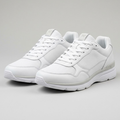
If you walk most days — or mix brisk walking with the occasional easy jog — you will see both walking shoes and running shoes marketed for the same pavement miles. This comparison helps adults 50+ decide which category is worth trying first. Shoes 50+ is a directory, not a store: use it to compare fit and design differences, then confirm current models on the brand or retailer page you choose.
For category deep-dives, see our walking shoes and jogging shoes hubs. Fit length, width, and replacement cues live in the shoe fit & buying guide. Gym and class shoes are covered under exercise shoes; a more guided feel is covered under stability-focused shoes.
Quick answer: which should you start with?
- Mostly everyday walking, errands, and travel — Start with dedicated walking shoes (or a walking-oriented line). Prioritize all-day comfort, toe room, and a ride that still feels steady after an hour.
- Brisk fitness walks that sometimes tip into short, easy jogs — A daily-trainer style running / light-jogging shoe often works well if the fit and cushioning still feel good on longer walks.
- Classes, strength work, or lots of side-to-side moves — A flatter, more planted exercise shoe usually beats a tall, soft road stack.
There is overlap. Many adults 50+ happily walk in running shoes. The goal is not a rigid rule — it is matching the shoe’s flex, cushion, and outsole to what you do most days.
How walking and running shoes typically differ
Brands blur categories on purpose, so treat these as tendencies — always check the specific model:
Cushion and stack height
- Running / daily trainers — Often more midsole foam and a higher stack to soften repeated impact. Soft pavement landings feel great for many walkers; a very tall, soft shoe can feel less planted to others.
- Walking-oriented shoes — Range from moderate everyday cushion to plush “max” walkers. Some walking lines sit a bit firmer or lower than race-day or max-cushion road shoes.
Flex and toe spring
- Walking — A smoother, more even roll through the forefoot often feels natural at a walking cadence. Some walking shoes flex more readily under the ball of the foot.
- Running — Built around a running gait (often more heel-to-toe propulsion and a firmer ride at higher speed). For pure walking, that can still feel fine — or slightly “pushy” if the forefoot is stiff.
Outsole and durability for walking miles
Running outsoles are tuned for road or trail grip under a running stride. Walking shoes may place rubber where walkers wear through first (heel and forefoot patterns differ by brand). For daily neighborhood loops, either can last well — replace when the midsole feels “dead,” the outsole is smooth, or hot spots appear. See replacement cues in the fit guide and walking hub.
Weight and upper feel
Modern running shoes are often light and breathable. Walking specialty lines may emphasize stretch uppers, deeper toe boxes, or easy-entry closures. If soft swelling later in the day is common for you, a roomy toe box and adjustable closure can matter more than the walking-vs-running label.
When walking shoes make the most sense
- Your main activity is steady walking (errands, travel, daily loops) rather than jogging.
- You want easy on/off — straps, slip-ins, or stretch entry — and will check that the heel still holds when you walk.
- You need a deeper or stretchier toe box; specialty walking brands often publish those options clearly.
- You prefer a ride tuned for walking cadence rather than a stiff racing or tempo forefoot.
Starting points on this directory: Orthofeet (walking-focused specialty fit) and Skechers (mainstream walking and Slip-ins lines). Browse more under walking shoes.
When running or daily-trainer shoes make sense for walking (or light jogging)
- You do brisk fitness walks and sometimes add short, easy jogs.
- You like more cushion under hard pavement and are comfortable with a slightly taller stack.
- You already know a daily-trainer geometry that fits your foot shape well.
- You want width or support options that a particular run brand publishes clearly on that model.
Directory starting points: Brooks (consistent daily trainers many adults 50+ use for brisk walking and light jogging), Hoka (high / max cushion and rocker feel), and New Balance (strong width menus and stability-minded options). See also jogging shoes and stability-focused shoes.
Fit notes that matter after 50
Category matters less than fit. Feet can change over time — more late-day swelling, a wider forefoot, or a need for more toe room are common. Use the same checklist whether the box says “walking” or “running”:
- Try shoes later in the day in the socks you will actually wear.
- Aim for a secure midfoot and heel, with about a thumb’s width beyond your longest toe when standing.
- If the forefoot burns or bulges, try a true wider width — not only a longer size.
- Walk several minutes on a hard floor if you can; notice pinching, heel slip, or a tippy feel.
- If you use custom inserts, confirm the stock insole is removable on that exact model.
Full detail: Shoe Fit & Buying Guide.
Who may prefer which (plain-language scenarios)
- Everyday walker who wants easy entry — Walking lines with straps or slip-ins (verify heel hold). Orthofeet and Skechers are common compares.
- Pavement walker who wants a soft landing — Max-cushion walking or high-stack daily trainers (Hoka is a frequent compare); if a tall soft shoe feels tippy, try a firmer or lower option.
- Brisk walker / occasional easy jogger — Daily-trainer running shoes (Brooks, New Balance, and similar) often cover both.
- Wide or hard-to-fit feet — Prioritize published width menus and roomy toe boxes (New Balance, Orthofeet) before obsessing over the walking vs running label.
- Gym and class days — Prefer exercise shoes with a more planted base over a soft road shoe.
Frequently asked questions
Can I walk in running shoes every day?
Often yes, if the fit is secure and the cushioning still feels comfortable after a longer walk. If the shoe feels tippy, stiff in the forefoot, or causes hot spots on walking-only days, try a walking-oriented model.
Are walking shoes OK for light jogging?
Some walking shoes handle an easy jog; others are tuned only for walking. If you regularly jog — even short distances — a daily-trainer running shoe is usually the safer category to compare first. See jogging shoes.
Do I need different shoes for walking and running?
Not always. One well-fitting daily trainer can cover brisk walking and light jogging. Separate pairs help if your walking shoe is very soft / easy-entry and your jogging needs a more secure, impact-ready setup — or if you want to rotate pairs to extend wear life.
Is a higher stack always better for adults 50+?
No. More cushion can feel great on hard surfaces, but “better” means comfortable and steady for you. If a soft, tall shoe feels unstable, try a moderate stack. Comfort preferences are individual — not a medical rule.
Where should I browse next on Shoes 50+?
Start with walking shoes or jogging shoes, check fit in the fit guide, then open a matching brand guide. The full map is in the shoe directory.
Next steps
- Decide whether your week is mostly walking, mixed brisk walk + easy jog, or gym/class work.
- Use the fit checklist in the fit & buying guide.
- Open one walking-oriented and one daily-trainer brand page that match your priorities, then confirm current models, widths, and returns before you buy.
Health note: General information only — not medical advice. Talk with a clinician if you have foot pain, balance concerns, or questions about starting or changing an exercise routine.