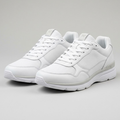
Looking for comfortable walking shoes for adults over 50 with sore feet after long days? Errands on pavement, a day of standing at a counter or a stove, grandchildren duty, or a long sightseeing day can all leave your feet aching by evening. Often part of the answer is in the shoe: cushioning that has worn flat, a pair that feels fine in the morning but tight by afternoon, a heel that slides, or a shoe built for a different job. This guide shows which shoe features people compare for each sore spot, simple habits for long days, and a free 3-tap End-of-Day Foot Comfort Check you can copy or share. It is general footwear information, not medical advice and not a treatment for any foot condition.
New here? The Shoe Type Finder matches you to a shoe type in about 2 minutes, and the walking shoes hub covers the basics. If your shoes might simply be worn out, start with the Shoe Replacement Checker.

Why feet can feel sore after a long day
Tired, sore feet at the end of a busy day are common, and the reasons are usually ordinary ones. From a footwear point of view, these are the ones worth checking first:
- Hours on hard surfaces — Pavement, tile, and concrete floors give back very little. A thin or worn sole leaves your feet doing more of the work.
- Cushioning that has worn flat — Midsole foam slowly loses its spring with use, often before the upper looks old. A favorite pair can quietly stop doing its job.
- Fit that changes through the day — Many people find their feet are a little fuller by afternoon. A shoe that is just right at 9am can press by 5pm.
- A foot that moves inside the shoe — If your heel lifts or your foot slides forward, your feet and toes work harder to stay in place on every step.
- The wrong shoe for the day — Thin flats, flimsy slippers, or fashion sneakers can feel fine for an hour and much less fine after six.
Where it is sore, and which shoe features to compare
Where your feet ache can hint at which part of the shoe to look at. This is a shopping guide, not a diagnosis. If pain is sharp, lasts for weeks, or comes with swelling, numbness, or color changes, see your doctor first.
| Where it aches by evening | Shoe features people often compare | Where to start on Shoes 50+ |
|---|---|---|
| Ball of the foot | Cushioning you can feel under the forefoot, a gently rocker-shaped sole, and a forefoot that is not squeezed. | Hoka guide (rocker geometry), Shoe Fit Checker |
| Heel | Heel cushioning, a firm heel counter that holds the heel steady, and a sole that is not worn down at the back. | Shoe Replacement Checker, Heel comfort checklist and check |
| Arch or middle of the foot | A shoe that bends at the ball of the foot rather than in the middle, a footbed that meets your arch comfortably, and a removable insole if you use your own. | Stability shoes hub, high arch walking shoes |
| Toes or the sides of the foot | About a thumb’s width beyond the longest toe, a rounded toe box, and a true wide width before simply sizing up. | Wide Shoe Finder, walking shoes for wide feet |
| Top of the foot | Lacing that is not too tight, a padded tongue, a roomier upper, or straps you can ease open later in the day. | Velcro walking shoes, Shoe Fit Checker |
| The whole foot feels pounded | More cushioning for hard floors, a pair that is not worn flat, and a second pair to rotate. | Shoe Replacement Checker, walking shoes hub |
Free End-of-Day Foot Comfort Check
Answer three quick questions to get a short shoe plan: what to look for in your next pair and where to go next on Shoes 50+. Nothing is saved or sent anywhere. Copy your plan into a note for your next shoe shop, or share it with a friend or family member who is on their feet all day too.
My end-of-day foot comfort check
Pick one answer for each question, then tap Show my plan.
Free from Shoes 50+. General footwear tips only, not medical advice. For pain that is sharp, lasts for weeks, or comes with swelling or numbness, talk with your doctor.
Heel discomfort after pavement days: cushioned shoes to compare
Quick answer: if your heels ache after a day of errands on pavement or a lot of standing, the shoe features most worth comparing are heel cushioning you can still feel after an hour, a firm heel counter that holds your heel steady, a sole that is not worn down at the back, and a heel that stays put as you walk. Many adults over 50 compare a cushioned-but-steady pair with a plush pair before deciding. This is footwear information only. It does not diagnose or treat heel pain.
1. Heel cushioning you can still feel after an hour
Many people land heel first when they walk, so the cushioning under the heel takes a lot of the work on hard ground. In the store or at home, walk on a hard floor for several minutes, not just on carpet. A shoe that feels soft for the first minute but firm and flat after ten is worth comparing with another pair.
2. A heel counter that holds its shape
The heel counter is the stiff cup around the back of the heel. Squeeze it between your thumb and fingers: a firmer counter usually holds the heel steadier than one that folds flat easily. A padded, shaped heel collar can help the heel feel held without rubbing.
3. A sole that is not worn down at the back
Turn your usual pair over. Smooth or uneven tread under the heel, or a shoe that leans when you set it on a table, often means the cushioning has worn out too. The free Shoe Replacement Checker walks through these signs in about a minute.
4. A heel that stays put
If your heel lifts or rubs at the back, check the length first: a shoe that is too long makes heel slip worse. Then try heel-lock lacing at the top eyelet, a snugger width, or a more structured heel. Our narrow heel and wide forefoot guide and the Shoe Fit Checker cover heel slip step by step.
5. Plush, moderate, or firmer cushioning
Softer is not automatically better for heels. Plush, max-cushion shoes make hard floors feel kinder for many walkers, but some people find very tall, soft soles feel less steady. A gently rocker-shaped sole is another feature some walkers like on long pavement days. The simplest test is to walk in a moderate pair and a plush pair back to back on a hard floor and keep the one that feels comfortable and steady.
Free Heel Comfort Shoe Check: three quick taps give you a short heel-focused shoe plan you can copy into a note for your next shoe shop or share with someone who is on their feet all day too. Nothing is saved or sent anywhere.
My heel comfort shoe check
Pick one answer for each question, then tap Show my heel plan.
Free from Shoes 50+. General footwear tips only, not medical advice. Heel pain that is sharp, lasts for weeks, or is worst with your first steps in the morning deserves a check with your doctor or a podiatrist.
Brand guides that cover heel cushioning and heel hold
- Hoka — Our guide covers thick midsoles and Meta-Rocker geometry for pavement walks, and notes that the tallest stacks, such as Bondi, can feel lifted for some walkers.
- Orthofeet — Our guide covers cushioned soles, removable dual-density insoles, and a mild rocker. Our narrow heel guide notes the brand says many styles come with fitting spacers meant to fine-tune a loose fit or heel slip.
- Skechers — Our guide covers Max Cushioning and ULTRA GO midsoles on walking lines, and the Heel Pillow on Slip-ins, which the brand says helps hold the heel.
- Brooks — Our guide covers soft DNA Loft cushioning on daily trainers and Ghost Max, a higher, more stable-neutral platform with a rocker.
These are starting points, not ranked picks or test results, and models change, so confirm current details on the official brand site. If heel pain is sharp, lasts more than a couple of weeks, or is worst with your first steps in the morning, see the doctor checklist further down this page and talk with your doctor or a podiatrist.
Comfort features to look for in walking shoes for long days
- Cushioning you can still feel after an hour — Walk on a hard floor for several minutes. Soft is not always better; some walkers find a very tall, soft sole less steady, so compare a moderate and a plush pair.
- A broad, steady base — A sole that does not feel tippy when you shift your weight side to side is easier to stand in for long stretches.
- A secure heel and midfoot — Your heel should stay put and your foot should not slide forward. A firm heel counter helps here.
- Room for afternoon feet — About a thumb’s width beyond the longest toe, a rounded toe box, and the right width, checked later in the day.
- A removable insole — Useful if you like to try a different insert. Check insole depth on the specific model.
- A closure you can adjust — Laces, straps, or a secure hands-free design you can ease open when your feet feel fuller.
- A breathable upper — Warm, damp feet tend to feel more tired. Mesh uppers usually breathe better than solid synthetics.
Our fit and buying guide explains length, width, cushioning, and closures in more detail, and the Shoe Fit Checker helps if one spot always rubs or pinches.
Simple habits that make long days easier on your feet
- Rotate two pairs — Alternating gives each pair a rest and spreads the wear, and you will notice sooner when one pair starts to feel flat.
- Shop in the afternoon — Try shoes on later in the day, in the socks you actually wear, and walk around the store for a few minutes.
- Choose socks with care — Socks that fit without bunching and do not dig in at the cuff are kinder over a long day.
- Break up long standing — Shift your weight, walk a few steps, or sit for a minute when you can.
- Do not save new shoes for the big day — Wear a new pair around the house and on short walks before a long outing or trip.
- Look at your feet — Red marks, blisters, or calluses in the same spot often point to a shoe that presses there.
Signs your shoes may be part of the problem
- Your feet ache sooner in your usual pair than they used to.
- The sole is smooth or worn down under the heel or the ball of the foot.
- The shoe leans to one side when you set it on a table.
- The cushioning feels hard, thin, or creased.
- Your feet feel better in a different pair on the same kind of day.
The free Shoe Replacement Checker walks through these signs in about a minute.
Brand starting points to investigate
These directory guides are starting points, not ranked picks or test results. Cushioning and fit vary by model, so try them on and walk-test before you decide.
- Orthofeet — Our guide covers cushioned walking shoes with roomy toe boxes, stretch uppers, several widths, and removable insoles, and lists daily walking and all-day standing among its best uses. Official Orthofeet site.
- Hoka — Our guide covers thick midsoles and rocker geometry that many adults over 50 choose for long errands and travel walking. It also notes that very tall stacks can feel less grounded for some walkers. Official Hoka site.
- Skechers — Our guide covers cushioned walking lines, removable footbeds on core lines, wide options, and easy-entry styles. Official Skechers site.
- Brooks — Our guide covers soft-cushioned daily trainers and stability options for brisk walking. Official Brooks site.
- New Balance, ASICS, and Saucony — Our guides cover width options and cushioned or stability-minded shoes, useful if your feet need more room by afternoon.
Browse the full brands index or the shoe directory. Always confirm current models and fit notes on the official brand site before you buy.
When to see a doctor instead of changing shoes
Ordinary end-of-day tiredness usually eases with rest. Talk with your doctor or a podiatrist if foot pain:
- is sharp, or lasts more than a couple of weeks even in comfortable shoes,
- is worst with your first steps in the morning,
- comes with swelling in one foot or ankle, warmth, redness, or a color change,
- comes with numbness, tingling, or burning, or
- involves a sore or blister that is slow to heal, especially if you have diabetes or circulation concerns.
A professional can check the cause and advise on footwear, inserts, and other options. Shoes 50+ can help you compare shoes, but it cannot diagnose foot problems.
Related tools and guides
- Shoe Type Finder — Find your shoe type in about 2 minutes.
- Shoe Replacement Checker — Is your cushioning or tread worn out?
- Shoe Fit Checker — Heel slip, cramped toes, and pressure points.
- Wide Shoe Finder — Do you need a wider shoe, and what kind?
- Walking shoes for orthotics — Removable insoles, heel cups and the take-out-the-insole test.
- Travel walking shoes · Sidewalk walking shoes · Mall walking shoes
- Walking shoes hub · Stability shoes hub · All free tools
FAQ
Are more cushioned shoes always better for sore feet?
Not always. More cushioning makes hard floors feel softer, which many people like on long days. Some walkers find a very tall, soft sole less steady, though. Compare a moderate and a plush pair on a hard floor and choose the one that feels comfortable and steady to you.
Why do my shoes feel tight in the afternoon?
Many people find their feet are a little fuller later in the day, especially after a lot of standing or walking. That is why shopping in the afternoon helps. If one foot or ankle swells noticeably, or swelling does not go down overnight, check with your doctor.
How often should I replace walking shoes I wear every day?
There is no single date. Watch for smooth tread, flat or creased cushioning, a shoe that leans, or feet that ache sooner than they used to. The Shoe Replacement Checker helps you decide.
Can the right shoes fix foot pain?
Shoes that fit well and suit your day can make long days more comfortable, but they are not a treatment. Pain that is sharp, lasts for weeks, or comes with swelling or numbness should be checked by a doctor or podiatrist.
My heel hurts after walks or first thing in the morning. What shoe features should I look for?
Shoes cannot treat heel pain, but some fit features are worth comparing while you get it checked. Many adults over 50 look for:
- Heel cushioning you can feel: a solid layer of foam under the heel, not a thin, flat sole. Stand on a hard floor in both pairs and compare.
- A firm heel counter: squeeze the back of the shoe between your thumb and fingers. It should hold its shape and cup your heel snugly, not fold flat.
- A removable insole: lift the insole out in the store. If it comes out, you have room for a heel cup, an arch insert, or an orthotic a professional suggests.
- A sole that bends near the toes: it should flex where your toes bend and stay steady through the middle.
- A heel that stays put: laces or straps you can snug up so your heel does not lift or slide with each step.
The heel comfort section above walks through each feature, and our walking shoes for orthotics guide shows the take-out-the-insole test if you use an insert. Heel pain that lasts more than a couple of weeks, is worst with your first steps in the morning, or comes with swelling or numbness is worth checking with a doctor, podiatrist, or physical therapist before you rely on a shoe change.
Can I put my own insole or orthotic in walking shoes for sore feet?
Often, yes, if the shoe has a removable insole and enough depth. Take the shoe’s own insole out first, put yours in, and check that your heel still sits down in the heel cup and the top of your foot is not pressed. Our orthotics guide has a free 4-tap Orthotic Fit Check. If a professional gave you the orthotic, ask them which shoe styles suit it.
Health note: General footwear information only, not medical advice. Shoes 50+ does not diagnose or treat foot conditions. If you have ongoing foot pain, numbness, swelling, diabetes, or circulation concerns, talk with your doctor or a podiatrist before relying on any shoe change.