Roomy Toe Box Walking Shoes After 50: Toe Box Shape vs Wide Width
Looking for roomy toe box walking shoes as an adult over 50? You are not alone. One of the most common things people over 50 say about shoes is that their toes feel squeezed, even in a shoe marked Wide. That is because a roomy toe box and a wide width (2E, 4E) are two different things. This guide explains the difference in plain language, then covers a long second toe, overlapping or curled toes, and room for bunions, with a free 4-tap Toe Room Check you can copy or share.
It is a footwear guide, not medical advice. Brand facts come only from our own brand guides and the brands’ official pages that those guides cite. Not sure what kind of shoe you need overall? Take the free Shoe Type Finder (about 2 minutes) or browse all free tools.
Quick answer: toe box shape vs wide width
Toe box shape is about the front of the shoe: how much room your toes get to spread, how far forward the shoe stays wide, and how much height there is over your toes.
Width (2E, 4E and so on) is about the whole shoe. Brooks, for example, says its Wide uses the same footbed with more upper material, while its Extra Wide also gets a wider footbed.
So: if only your toes feel squeezed, look at shape first. If your whole foot feels squeezed, or spills over the sole, look at width first. Some people need both.
What people over 50 are asking
In October 2026 we read what walkers were saying on X and Reddit. A few patterns kept coming up (paraphrased, personal reports only):
- Walkers who moved to a different brand mainly because it had a bigger toe box, not because it was marked wide.
- People with a long second toe whose second toe hits the end of the shoe, even when the big toe has room.
- People with an overlapping or underlapping little toe looking for a front that does not press it.
- A common lesson on Reddit’s wide-feet community: a wide size does not always mean a wide toe box. Some found Wide sizes still squeezed the front while the heel slid around (r/widefeet thread, r/BarefootRunning thread).
These are personal experiences, not tests. Everyone’s feet are different, which is why this guide focuses on how to check the fit for yourself.
Free Toe Room Check (4 taps)
Answer four quick questions for a short plan: whether to look at shape or width first, a starting point from our brand guides, and what to check in the store. Nothing is saved or sent anywhere.
My Toe Room Check
Pick one answer for each question, then tap Show my plan.
Free from Shoes 50+. A fit starting point from our brand guides, not a ranking and not medical advice. Confirm current models and widths on each official site.
Toe box shapes in plain language
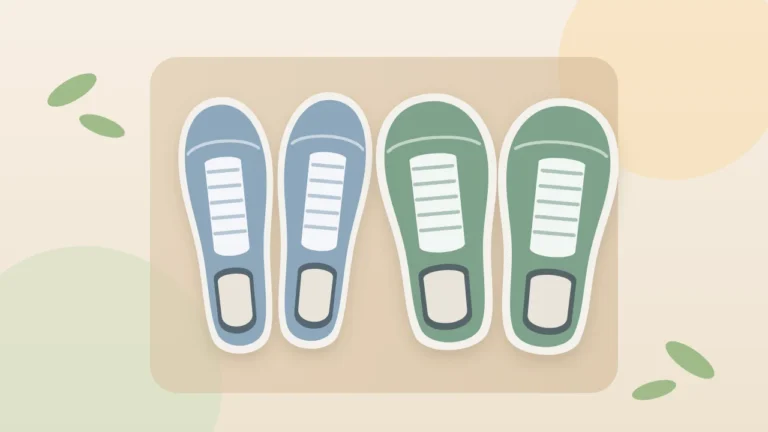
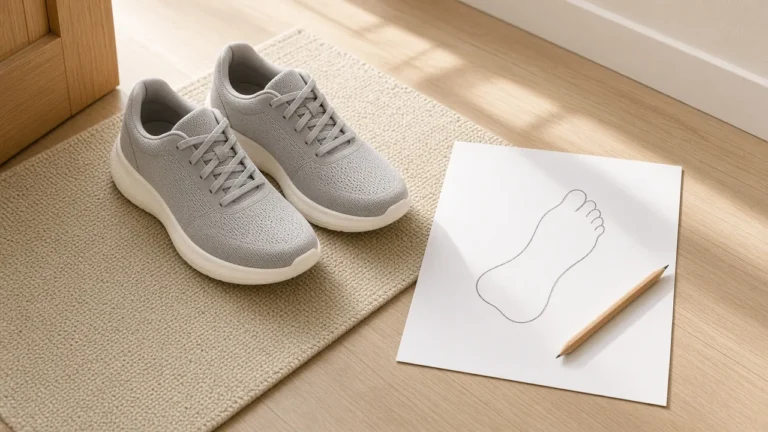
Shoe brands rarely publish a toe box “shape” label, so use your eyes and your toes. Hold the shoe sole-up next to a tracing of your foot (or the insole next to your bare foot) and compare.
| What you see | How it may feel | Worth trying if |
|---|---|---|
| Tapered or pointed front (narrows quickly toward the big toe) | Outer toes and a long second toe can be pushed together or forward. | Your toes are fairly even in length and your forefoot is slim. |
| Rounded front | More room for the middle and outer toes than a tapered front. | Your toes feel a little crowded, but the rest of the shoe fits. |
| Foot-shaped front (stays wide toward the toe tips, straighter on the big-toe side) | Toes can spread. Altra calls its version FootShape and says it is not a wide shoe. | You have a long second toe, overlapping toes, or want your toes to lie flat. |
| Wide or Extra Wide width (2E, 4E and similar) | More room across the whole shoe. The front shape may stay the same as the standard width. | Your whole foot feels squeezed, or your foot spills over the sole. |
| Deep toe box (more height over the toes) | Less pressure on the tops of curled or overlapping toes. | Your toes rub on top, or you wear a thicker insole. |
Width letters are not the same across men’s and women’s sizes. In the Brooks and New Balance charts, men’s 2E and women’s D are both Wide, and men’s 4E and women’s 2E are both Extra Wide. Our Brooks vs New Balance for wide feet guide sets the codes side by side.
If your second toe is your longest
Many people have a second toe that is longer than the big toe. In a tapered shoe, that toe often reaches the end first.
- Size by your longest toe: check the space in front of whichever toe is longest, not just the big toe. Brooks suggests about a half inch to an inch of space in front of your longest toe.
- Look at where the front slopes down: a toe box that keeps its height and width further forward gives a long second toe more room.
- Keep the heel snug: if a longer size lets your foot slide forward, your toe still hits the end. A heel-lock lace at the top eyelet helps hold the heel back.
- Check later in the day: feet are often a little fuller in the afternoon, so try shoes on then, with the socks you walk in.
Not sure whether you need more length or more width? The free Half Size vs Wide Check takes three taps.
Overlapping or curled toes
- Height matters as well as width: a deeper toe box leaves room over toes that curl or ride up.
- Watch for seams: a seam or stiff overlay right over the toe that overlaps can rub. Softer, smoother uppers can feel kinder.
- A rounder front keeps the outer toes from being pushed together.
- Our brand guides: our Orthofeet guide covers its wide and deep toe boxes and stretch uppers. Every Altra has its FootShape toe box (see our Altra guide).
Room for bunions
Many adults over 50 shop with a bunion in mind. From a fit point of view, it helps to look for:
- Room at the widest part of your foot: the bunion sits at the widest point, so a shoe that is wide there matters more than a wide tip.
- A soft or stretch upper over the joint: stretch uppers can feel kinder over a bunion, but they do not replace a shoe that is too narrow.
- Lacing: some people skip the lowest eyelets to ease pressure across the front. On Reddit, some walkers with bunions found Altra’s Regular toe box was not enough and preferred its Wide.
- Shape plus width: if a bunion presses in a roomy toe box, try the Wide version of the same model.
Please check with a professional: a bunion that is painful, red, swollen, or changing shape is worth a visit to a podiatrist or your doctor. Shoes 50+ only covers how shoes fit.
When you need a true wide width instead
- Your whole foot feels squeezed, not just your toes.
- Your foot spills over the edge of the insole when you stand on it.
- A roomy toe box still presses at the sides or the ball of the foot.
- The extra width is needed underfoot: Brooks says its Extra Wide adds a wider footbed, not only more upper.
Our walking shoes for wide feet guide explains width labels and lists brands with Wide and Extra Wide. If your toes need room but your heel slips, see narrow heel, wide forefoot shoes.
Where our brand guides land on toe room and width
From our own brand guides and the official brand pages they cite. Models and width menus change, so check the current product page before you buy.
| Brand | Toe room | Widths | Good to know |
|---|---|---|---|
| Altra | FootShape toe box on every model; Altra says it is “not a ‘wide’ shoe”. | Wide (2E) on the Torin 9, Torin ST, Paradigm 8 and Lone Peak 9 family. No Extra Wide. | Zero drop or 4mm soles; ease in. |
| HOKA | HOKA says the Clifton 10 has a slightly roomier forefoot than the Clifton 9. | Clifton 10 in standard, wide and extra wide. | Raised heel (about 8mm on the Clifton 10). |
| Brooks | Shape varies by model. | Four widths: narrow, medium, wide and extra wide. | Extra Wide adds a wider footbed. |
| New Balance | Shape varies by model. | From extra narrow to XX-Wide (men’s 6E, women’s 4E) on some models. | Most width steps in our guides. |
| Orthofeet | Wide and deep toe boxes. | Several widths. | Stretch uppers; easy-entry options. |
Comparing two of these for toe room? See Hoka vs Altra walking shoes (Clifton 10 vs Torin 9) with a free Toe Room and Drop Match.
Beyond sneakers: everyday and dressier shoes with toe room
Many people over 50 want toe room for a family wedding, a day at work, church or a dinner out, not only for walks. A sneaker is not the only answer. Toe room comes from the shape and depth of the front of the shoe, and you can check that on almost any style.
What to look for in a non-sneaker
- Toe box shape: a rounded or squared front that follows the line of your toes. A pointed or sharply tapered toe can still pinch, even in a Wide.
- Depth: enough height over your toes that the top does not press on curled toes or a bunion. A soft or stretchy upper can help here.
- Adjustable straps or laces: buckles, hook-and-loop straps, laces or elastic laces let you fit the widest part of your foot and still keep your heel snug. Plain slip-on loafers and court shoes have nothing to adjust.
- Removable insole: if you use your own insole or orthotic, a removable footbed leaves room for it without crowding your toes.
- Real width options: look for Wide or Extra Wide on the product page. Width letters differ between brands, so go by the word and by how the shoe feels.
- A lower, broader heel: a low block heel or gentle wedge keeps your foot from sliding forward into the toe box. Take extra care on stairs with any heel.
Styles worth a look: casual leather or knit lace-ups, sandals with adjustable straps, round-toe Mary Janes and strap flats, side-zip ankle boots with a round toe, and clogs or mules with a roomy front (check that your heel stays put).
Examples from our brand guides
- Clarks: Clarks’s US page for the Cloudsteppers Solevana Sport lists a “Signature Toe-Box Fit” with more room, plus elasticized lacing (checked 31 October 2026). It is a soft casual shoe rather than a dress shoe. Our Clarks guide also covers the Arla Stroll wedge sandal with adjustable hook-and-loop straps and the Kynnzie Zip side-zip ankle boot. Toe shape varies by style, so check each one.
- Orthofeet: our guide notes its focus on wide and deep toe boxes, and Orthofeet’s own site lists casual shoes, dress shoes, Mary Janes, clogs, sandals and boots as well as sneakers (checked 31 October 2026). Check the width menu on each style.
Whatever the style, try dressier shoes on later in the day with the socks or hosiery you will wear, stand up, and check that your toes can wiggle. For a long event on your feet, it can help to bring your walking shoes to change into. If width is the bigger problem, the Wide Shoe Finder can help. If bunions or toes that are changing shape are sore, a podiatrist or doctor can advise.
How to check toe room at home or in a store
- Trace your foot on paper while standing, later in the day.
- Stand on the insole: take the insole out (if it lifts out) and stand on it barefoot. If your toes hang over the edge, that shoe is narrow at the front for you.
- Wiggle test: with the shoe laced, you should be able to wiggle all your toes, including the little toe.
- Press the front: check the space in front of your longest toe while standing.
- Walk and turn: step on and off a curb or stair. The heel should stay put while the toes stay relaxed.
- Check returns before buying online. Shoes 50+ does not sell shoes.
After a test walk, the free Shoe Fit Checker helps you decide what to change if you notice cramped toes, heel slip, or pressure points.
Related guides and tools
- Walking shoes for wide feet — width labels, mistakes to avoid, and brands with Wide and Extra Wide.
- Half size up vs wide width — a free 3-tap check for length vs width.
- Narrow heel, wide forefoot shoes — when the toes need room but the heel slips.
- Altra brand guide — FootShape toe box, zero drop, Torin 9 and Wide (2E).
- Hoka vs Altra walking shoes — Clifton 10 vs Torin 9 for toe room and drop.
- Brooks vs New Balance for wide feet — 2E, 4E and 6E side by side.
- Wide Shoe Finder · Shoe Type Finder · All free tools
- Walking shoes hub · All guides by category · Brands index
FAQ
Is a wide toe box the same as a wide shoe?
No. A wide toe box is about the shape of the front of the shoe, so your toes have room to spread. A wide width (such as 2E or 4E) adds room across the whole shoe, and the front shape may stay the same. Altra, for example, says its FootShape toe box is not a wide shoe. If only your toes feel squeezed, look at shape first; if your whole foot feels squeezed, look at width.
What shoes suit a long second toe?
Size by your longest toe, even if it is the second one, and look for a toe box that stays roomy further forward. Brooks suggests about a half inch to an inch of space in front of your longest toe. Keep the heel snug, for example with heel-lock lacing, so your foot does not slide forward.
Do I need wide shoes for bunions?
Not always. Some people do well with a roomy toe box and a soft upper in their usual width, and others need the Wide version too. Look for room at the widest part of your foot. A bunion that is painful, red, or changing is worth checking with a podiatrist or doctor.
Which brands have a roomy toe box?
From our brand guides: every Altra has its FootShape toe box, Orthofeet focuses on wide and deep toe boxes with stretch uppers, and HOKA says the Clifton 10 has a slightly roomier forefoot than the Clifton 9. Toe box shape varies by model, so try the actual shoe.
Should I size up to get more toe room?
A longer size adds length, not much width, and can make your heel slip. If the length is right but your toes feel squeezed, try a roomier toe box or a wider width in your measured length first. The free Half Size vs Wide Check can help you decide.
Can I find a roomy toe box that isn’t a sneaker?
Yes. Look for a rounded or squared toe, enough depth over your toes, adjustable straps or laces, a removable insole if you use your own, and Wide or Extra Wide on the product page. Casual lace-ups, sandals with adjustable straps, round-toe Mary Janes and side-zip ankle boots are good places to start. From our brand guides, Clarks lists a roomier toe-box fit on its Cloudsteppers Solevana Sport, and Orthofeet, which focuses on wide and deep toe boxes, also sells casual and dress styles. Toe shape varies by style, so try the actual shoe. See everyday and dressier shoes with toe room above.
Health note: General footwear information only, not medical advice. Shoes 50+ does not diagnose or treat foot conditions. If you have foot pain, bunions or toes that are changing, numbness, balance concerns, diabetes, or circulation concerns, please consult a qualified healthcare professional, such as your doctor or a podiatrist, before relying on any shoe change.