Comfort Shoes for City Walking After 50: Cobblestones, Wet Streets and Long Sightseeing Days
A day in a new city can mean many hours on your feet: cobbled lanes, wet stone pavements, temple paths, museum floors and a few more hills than the map suggested. The shoes you choose, and how you prepare them, make a real difference to how the day feels by the evening.
This guide covers what to look for in comfort shoes for city walking after 50, how different street surfaces change what you need, how to break shoes in before a trip, and a simple routine for long sightseeing days. For packing lists and trip planning, see our travel walking shoes guide.
Quick answer
- Choose a pair you already know. Broken-in shoes you have walked in for hours at home are a safer bet than a brand-new pair.
- Steady cushioning, stable base. Enough cushion for hard streets, with a sole wide and firm enough that it does not wobble on uneven stones.
- Room to spread. Leave about a thumb’s width in front of your longest toe and make sure the widest part of your foot is not squeezed.
- A heel that stays put. A firm heel counter and good lacing stop your foot sliding on hills and steps.
- Grip for wet days. A rubber outsole with a clear tread pattern for rain, polished stone and smooth tiles.
- Good socks and a spare pair. Moisture-wicking socks can make a long day feel shorter.
What city streets ask of your shoes
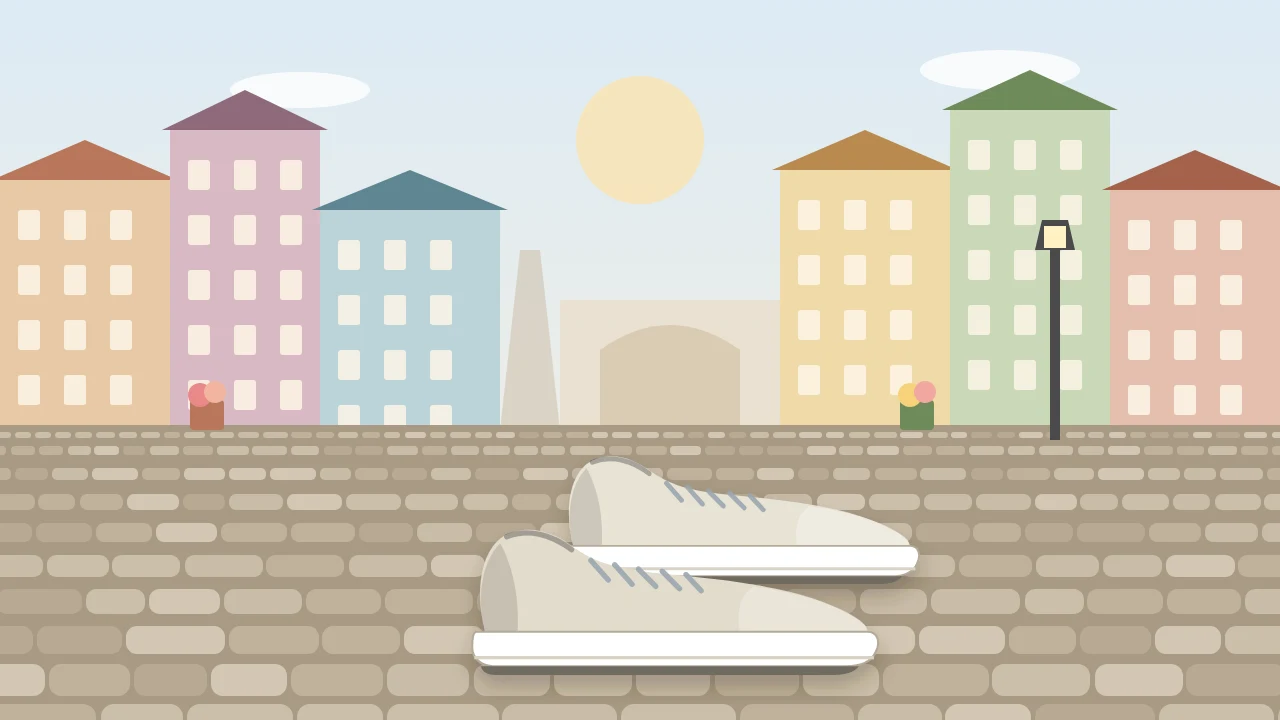
City walking is rarely one surface. A single afternoon can move from smooth pavement to old cobbles to gravel paths and stone steps. Each asks something slightly different of your shoes.
| Surface | What tends to help | Simple tip |
|---|---|---|
| Cobblestones and setts | A wider, flatter base and moderate cushioning; a sole that is not too soft | Shorten your stride a little and look a few steps ahead |
| Wet stone, marble and smooth tiles | A rubber outsole with a clear tread pattern; avoid worn-smooth soles | Check your tread before you pack; walk a little slower on shiny surfaces |
| Temple paths, gravel and park trails | A slightly thicker outsole and a secure fit so small stones do not shift your foot | Tie laces snugly so the heel does not lift |
| Hills and stone steps | A heel that stays put and enough toe room for downhill sections | Use a heel-lock lacing loop if your foot slides forward going down |
| Museums, stations and shopping streets | Steady cushioning for long stretches of hard, flat floors | Take short seated breaks; flat floors can be tiring over hours |
Cushioning: enough for hours, not so soft you wobble
Hard city streets can make cushioning feel welcome, especially after the first few hours. But more is not always better. A very soft, tall sole can feel unsteady on rounded cobbles and uneven paving. Many walkers over 50 prefer moderate, even cushioning with a broad base, so the shoe feels comfortable but still planted.
A quick check: stand on one foot in the shoe and gently rock side to side. If the sole feels squishy or tippy at home, it will likely feel the same on old stones. Our Walking Shoes for Adults 50+ guide explains the difference between a soft landing and a more planted feel.
Width and toe room for a long day
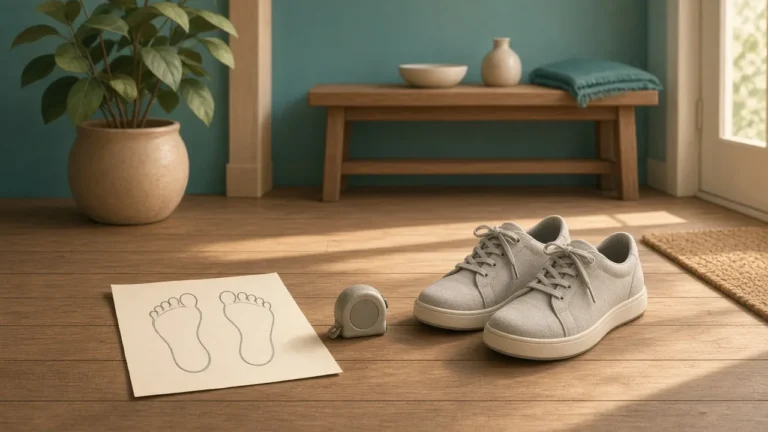
Feet often feel fuller later in the day, especially in warm weather and after hours of walking. Shoes that feel fine at breakfast can start to press by late afternoon. When you try shoes on, do it later in the day and wear the socks you will travel with.
- Leave about a thumb’s width between your longest toe and the end of the shoe.
- The widest part of your foot should sit at the widest part of the shoe without bulging over the sole.
- If the shoe pinches across the ball of your foot but the length is right, a wider width usually helps more than a bigger size.
Our Shoe Fit & Buying Guide walks through these fit checks step by step.
Support and a secure heel
On hills, steps and uneven stones, a shoe that holds your heel firmly feels more confident. Look for a firm heel counter (the back of the shoe should not fold easily when you press it) and a lacing system that lets you snug the shoe around the middle of your foot. If you prefer easy-on styles, check that the heel still feels secure when you walk briskly and go up and down a few stairs.
Breaking shoes in before the trip
New shoes can reveal small rubbing points only after a few hours. It is far easier to find these at home than halfway through a city tour.
- Start a few weeks ahead if you can.
- Build up gradually: short walks first, then a couple of longer outings of several hours.
- Include hills, steps and different surfaces so the shoes are tested on more than flat pavement.
- Wear your travel socks and any insoles you plan to use.
- Do a long-day test: wear the shoes for most of a day out and note how they feel in the evening.
If something rubs, try adjusting the lacing or a different sock thickness first. If it still bothers you after a long walk, there is time to exchange the pair before you leave.
Socks: the quiet comfort upgrade
Socks are easy to overlook, but on long walking days they matter. Many walkers like cushioned socks made from moisture-wicking fibres such as merino wool or synthetic blends, with smooth toe seams. Cotton holds moisture and can feel damp and rub after many hours.
- Choose socks that fit well: no bunching at the toes or slipping at the heel.
- Pack a spare pair in your day bag and change at lunch if your feet feel warm or damp.
- Try shoes on with the same socks you will wear on the trip, since thickness changes the fit.
A simple routine for long city days
Before you head out
- Lace up snugly after a few minutes of walking, once your feet have settled into the shoes.
- Check the weather: on rainy days, pick your pair with the best grip.
- Put spare socks in your bag.
Around midday
- Sit down for a proper break and take your shoes off for a few minutes if you can.
- Re-tie your laces; they often loosen on uneven ground.
- Change socks if your feet feel warm or damp.
In the evening
- Take the insoles out so the shoes can air and dry overnight.
- If you brought a second pair, rotate them on back-to-back walking days.
- Notice any spot that rubbed and adjust the lacing or socks for tomorrow.
Wet streets and rainy days
Rain turns polished stone, painted crossings and smooth tiles slick. A rubber outsole with a clear tread pattern helps, and so does checking your tread before the trip: if the pattern under the ball of your foot has worn smooth, it may be time for a new pair. Walk a little slower on shiny surfaces and give your shoes a night to dry if they get soaked.
See comfort shoes on real city streets
If you’d like to see comfort shoes out on real city streets, follow Mabel’s walks on YouTube. Mabel, 72, takes short walks through different cities in her cushioned white walking shoes. Her first two walks visit London’s Leadenhall Market on a rainy day and Kyoto’s temples and the Philosopher’s Path, with plenty of old stones and cobbles along the way.
Related guides
- Travel Walking Shoes for Sightseeing Over 50 — Packing, trip planning and a free travel shoe checklist.
- Shoe Fit & Buying Guide for Adults 50+ — Length, width, heel fit and when to replace.
- Walking Shoes for Adults 50+ — What matters most in a walking shoe after 50.
FAQ
What kind of shoes are best for walking all day in a city after 50?
Look for a broken-in walking shoe with steady cushioning, a firm heel counter that holds your heel, a stable base that does not wobble on uneven stones, a grippy rubber outsole, and enough room for your toes to spread later in the day. There is no single best shoe; the right pair is the one that still feels good on your own long walks at home.
Are soft, thick soles good for cobblestones?
A cushioned sole helps on hard streets, but a very soft or very narrow sole can feel tippy on rounded stones. Many walkers prefer moderate cushioning with a wider, flatter base and a slightly firmer feel underfoot for old towns with cobbles.
How long should I break in new shoes before a trip?
If you can, start a few weeks ahead. Begin with short walks, build up to a couple of long outings of several hours, and wear the socks you plan to pack. If anything rubs or pinches by the end of a long walk, you still have time to adjust the lacing, try different socks or exchange the pair.
What socks are best for long sightseeing days?
Many walkers like cushioned socks made from moisture-wicking fibres, such as merino wool or synthetic blends, with smooth toe seams. Cotton holds sweat and can feel damp after a long day. Pack a spare pair so you can change at midday if your feet feel warm.
Health note: General footwear information only, not medical advice. Shoes 50+ does not diagnose or treat foot conditions. If you have foot pain, balance concerns, numbness, swelling that does not settle, diabetes, or circulation concerns, please consult a qualified healthcare professional, such as your doctor or a podiatrist, before relying on any shoe change.