Looking for high arch walking shoes for adults over 50? A higher arch can change how a shoe feels: more pressure lands on the heel and the ball of the foot, the top of the foot (the instep) can press against the laces, and a shoe’s built-in arch shape may not match yours. This guide explains what to look for, how to check a pair, lacing and insole tips for a high instep, and a free 3-tap High Arch Shoe Check you can copy or share. It is general footwear information framed as fit preference, not medical or orthotic advice; confirm current models on each brand’s official site.
New to choosing walking shoes? Start with the Shoe Type Finder or our walking shoes hub. If your main question is width or heel slip, the Shoe Fit Checker covers that. This page is for walkers whose arch sits noticeably high.
How a higher arch can change shoe fit
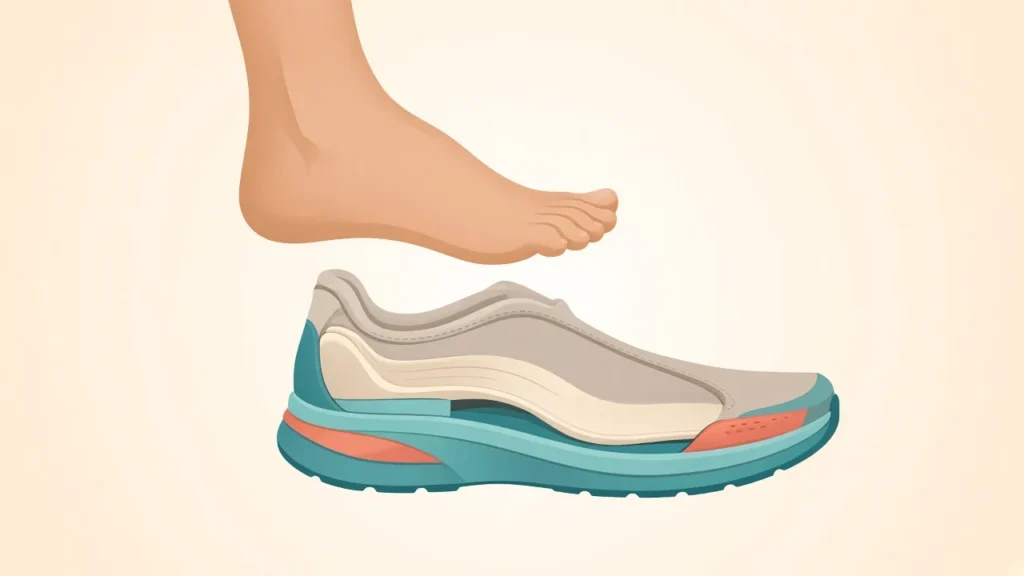
With a higher arch, less of the sole of the foot touches the ground, so weight tends to concentrate under the heel and the ball of the foot. Many people with higher arches also have a taller instep, which is why a shoe can feel fine in length and width but tight across the top once it is laced. And because an insole’s arch is a fixed shape, it can leave a gap under a high arch or press in the wrong spot.
None of this means a special shoe is required. For most walkers it comes down to three things: enough cushioning where the pressure lands, enough room over the top of the foot, and an insole that feels comfortable under the arch rather than one that pushes into it.
Signs your shoes are not working for a high arch
- The ball of the foot or the heel feels sore or “hot” on longer walks while the middle of the foot feels untouched.
- Laces press on the top of your foot, or you get a sore spot over the instep, even when the shoe is the right size.
- You can feel a gap under your arch, or the insole’s arch bump presses in an uncomfortable place.
- Shoes feel firm and unforgiving on pavement, or you feel your weight roll toward the outer edge.
What to look for in walking shoes for a high arch
| Feature | Why it can help a higher arch | How to check |
|---|---|---|
| Cushioning under heel and forefoot | Softens the two areas that take most of the load when the arch sits high. | Walk on a hard floor; landings and push-offs should feel comfortable, not jarring. |
| Room over the instep | A taller top of the foot needs depth in the upper so laces do not press. | Lace normally; you should not feel a hard line or pressure across the top. |
| Removable insole | Lets you swap in a different insole or your own insert if the built-in arch does not suit you. | Lift the insole out in the store or at home; check the shoe still fits with your insert in. |
| Stable, not narrow, base | A broader sole and firm heel counter can feel steadier if you tend to roll toward the outer edge. | Stand on one foot briefly and walk a turn; the shoe should not feel tippy. |
| A little flexibility at the forefoot | A shoe that bends where your toes bend helps a smoother push-off. | Bend the toe toward the laces; it should flex at the ball of the foot, not the middle. |
Free High Arch Shoe Check
Answer three quick questions to get a short shoe-shopping plan with what to look for and where to go next on Shoes 50+. Nothing is saved or sent anywhere; copy your plan into a note for your next shoe shop or share it with someone who helps you shop.
My high arch shoe check
Pick one answer for each question, then tap Show my plan.
Free from Shoes 50+. General footwear tips only, not medical advice. For ongoing foot pain, see a podiatrist.
Lacing for a high instep
If the shoe fits in length and width but presses on top, lacing is the first thing to try. Loosen the laces fully before you put the shoe on, then tighten gently from the toes up rather than pulling hard at the top.
- Skip a crossing (window lacing) — Find the eyelets where the top of your foot feels pressure, run the laces straight up the same side for one eyelet instead of crossing, then continue crossing above. This leaves an open “window” over the high point.
- Straight-across (parallel) lacing — Fewer diagonal crossings over the instep can spread pressure more evenly.
- Keep the heel snug separately — If loosening the middle lets your heel lift, use the top eyelet for a heel-lock. Our narrow heel and wide forefoot guide shows how.
A thicker, padded tongue can also soften lace pressure. Strap shoes let you set each strap separately, which some people with a tall instep find easier; see our velcro walking shoes guide.
Insoles, inserts, and orthotics
A removable insole is one of the most useful features for a high arch, because it lets you choose what sits under your foot. A few practical points:
- Take the original insole out before adding your own insert. Stacking two usually makes the shoe too tight over the instep.
- Bring your insert or orthotic when you try shoes on, and check length and top-of-foot room with it in place.
- More arch is not automatically better. An insert should feel comfortable along the arch, not like a hard bump.
- Shoes with deeper uppers have more room for inserts. If a clinician has prescribed orthotics, follow their advice on footwear.
Cushioned or stability shoes for a high arch?
Many walkers with a higher arch start with a well-cushioned neutral walking shoe, because cushioning eases the heel and the ball of the foot. Stability-focused shoes are designed mostly to guide feet that roll inward, which is less common with a high arch, but some people still prefer their firmer, more planted feel. Treat it as a comfort preference and try both if you are unsure. Our stability shoes hub explains the difference in plain language.
How to test a pair at home or in a store
- Try shoes later in the day, in the socks you walk in, with your insert if you use one.
- Check length standing, then lace using the tips above.
- Walk on a hard floor for a few minutes, including a turn and a step up. Notice the heel, the ball of the foot, and the top of the foot.
- Compare two or three pairs side by side; the difference under a high arch is often easier to feel in contrast.
- Keep tags and the box until you have walked in them indoors for a while.
Brand starting points to investigate
These guides in our directory are starting points, not ranked picks or test results. Fit varies by model, so walk-test before you decide.
- Skechers — Our guide covers its Arch Fit cushioning and removable footbeds on core walking lines. Official Skechers site.
- Orthofeet — Our guide covers its removable orthotic insoles and optional Arch Booster on many styles, plus deep toe boxes and multiple widths. Official Orthofeet site.
- Hoka and Brooks — Our guides cover their cushioned walking and light-jogging lines, a common starting point if the heel and ball of the foot take the load.
- New Balance, ASICS, and Saucony — Laced shoes with width options on selected models (see each guide), useful if you also need instep or forefoot room.
Browse the full brands index or the shoe directory. Always confirm current models, insoles, and fit notes on the official brand site before you buy.
Related tools and guides
- Shoe Type Finder — Find your shoe type in about 2 minutes.
- Shoe Fit Checker — Heel slip, cramped toes, and pressure points.
- Fit and buying guide — Length, width, closures, and when to replace.
- Shoe Replacement Checker — Is your cushioning worn out?
- Walking shoes hub · Stability shoes hub · All free tools
FAQ
How do I know if I have high arches?
A simple at-home look: step onto a piece of paper or a dark mat with a wet foot. If the print shows the heel and the ball of the foot joined by only a thin strip along the outer edge, or no strip at all, your arch is probably on the higher side. This is a rough guide, not a diagnosis.
Do high arches need “arch support” shoes?
Not necessarily. Many people with high arches feel best in a cushioned shoe with an insole that is comfortable under the arch, rather than one with a firm, tall arch built in. Comfort on a walk test is a better guide than a label.
Are max-cushion shoes good for high arches?
They can feel comfortable because they soften heel and forefoot landings. Some people find a very tall, soft shoe less steady, especially if they feel their weight roll to the outer edge, so compare one against a moderate-cushion shoe.
Can I use my own orthotic in walking shoes?
Usually, if the shoe has a removable insole and enough depth. Remove the original insole, put your orthotic in, and check length and top-of-foot room before buying.
Health note: General footwear information only, not medical advice. If you have ongoing arch, heel, or ball-of-foot pain, numbness, frequent ankle rolling, or a foot shape that is changing, see a podiatrist or other qualified clinician about what footwear suits you.