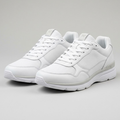
Mall walking is steady, flat, and often longer than a quick outdoor loop — so shoppers comparing the best shoes for mall walking adults over 50 usually want cushioning, a secure fit, and grip that feels sure on polished floors. This page helps you compare those comfort features and related categories before you buy elsewhere. It is not medical advice and does not claim any shoe will fix foot pain.
Prefer a short preference quiz first? Try the free Shoe Type Finder — then come back here for mall-specific checklist notes. Broader everyday walking priorities live on our walking shoes hub. Closures, length, and replacement cues are in the shoe fit & buying guide. All free checkers are listed on the tools page.
Walking indoors on a treadmill instead? Our treadmill walking shoes guide for adults over 50 covers cushion, heel hold on incline, and when belt-only pairs wear out, plus a free Treadmill Shoe Check.

What mall walking asks of a shoe
Indoor mall loops are usually smoother and more predictable than cracked sidewalks, but they can still add up to real mileage — early-morning circuits, shopping days with long corridors, or meeting friends for a steady pace under climate control. That pattern asks a shoe for:
- All-day underfoot kindness — Cushion that stays comfortable after many flat laps, without feeling mushy or tippy when you turn a corner.
- Secure, adjustable fit — Heel and midfoot hold that stays put as feet warm up or swell a little later in the day.
- Quiet, grippy contact — An outsole that feels sure on polished tile or smooth concrete and does not squeak loudly on every step.
- Breathable comfort — An upper that does not trap heat on long indoor loops.
None of these points is a medical requirement. They are practical shopping cues adults over 50 — and adult children helping a parent — often use when comparing indoor walking pairs.
Comfort checklist for flat indoor miles
Use this checklist in a store aisle or during an online return window. A short hard-floor walk test tells you more than a logo or a marketing label.
Cushioning that does not feel tippy
Mall floors are flat, so many shoppers want a softer landing than a thin fashion sneaker. Soft is welcome; unstable is not. On your walk test, notice whether the platform rolls under your foot when you turn or change pace. A planted feel with enough cushion for long loops usually beats a very soft shoe that makes you shorten your stride.
When the midsole already feels flat, compressed, or “dead” compared with a newer pair, check the free Shoe Replacement Checker — a short wear-and-feel guide (not a diagnosis) for when cushion and sole condition suggest it is time to compare a fresh pair.
Breathable upper for longer loops
Indoor air is warmer than a cool outdoor morning. Mesh or similarly breathable uppers help many adults over 50 stay comfortable on multi-lap days. Stretch zones can also feel kinder if feet swell toward the afternoon. Still check that breathability does not come with a floppy midfoot — the shoe should feel gently wrapped, not loose.
Quiet, grippy outsole on smooth floors
Polished mall tile and smooth concrete reward outsoles that grip without feeling glass-slick. Listen and feel: a loud squeak on every step is annoying in quiet morning malls; a slippery slide when you turn is worse. Prefer a tread that feels sure underfoot on the surfaces you actually use indoors.
Mall walking vs outdoor sidewalk walking
The same everyday walking shoe can serve both, but the priorities shift slightly:
- Mall / indoor — Flat miles, climate control, smooth floors, often longer continuous loops. Cushion comfort, breathability, and quiet grip matter more; aggressive trail tread usually does not.
- Outdoor sidewalk — Uneven pavement, curbs, weather, and occasional damp patches. Dependable outsole grip and a secure upper matter even more when surfaces change underfoot.
Many adults over 50 keep one versatile walking pair for both. Others prefer a slightly softer indoor-friendly pair for mall mornings and a grippier sidewalk pair for neighborhood loops. That is a preference choice, not a rule. Start with the walking shoes hub if you want the broader category view.
Choosing that outdoor pair? See sidewalk walking shoes with good grip for adults over 50 for tread, rubber, and fit tips, plus a free Sidewalk Grip Check.
How to choose width and fastening for all-day indoor walks
Long indoor miles amplify small fit mistakes. Compare:
- Width — Forefoot squeeze or hotspots after 20–30 minutes often means you need width, not only a half-size longer. Brand width menus differ; use the free Wide Shoe Finder when room in the toe box is a recurring issue.
- Length — A thumb’s width of space at the toe is a common starting check, then confirm on a walk — not only sitting.
- Fastening — Traditional laces give the most midfoot dial-in for long days. Hook-and-loop and easy-adjust systems help when you want to loosen later without a full re-tie. If bending or lace fuss is the friction point, see our guide to hands-free slip-on walking shoes and still walk-test heel hold.
After you notice hotspots, heel slip, or end-of-day marks, the free Shoe Fit Checker walks through practical fit questions so you can decide what to change next — length, width, or closure style.
Category and brand starting points
These are directory starting points already used on Shoes 50+ — not a ranked “best of” list, and not a claim that we tested specific models. Confirm current walking lines, widths, and fit notes on each brand page before you buy.
Begin with the walking shoes category hub, then investigate brands that match your cushion and fit priorities:
- Orthofeet — Walking-focused specialty brand; easy-on and roomy-fit angles shoppers often compare for all-day comfort.
- Skechers — Mainstream walking and Slip-ins-style lines many adults over 50 compare for indoor errands and mall loops; still walk-test heel hold.
- Brooks — Soft everyday trainers and supportive options shoppers often shortlist for steady walking miles.
- Hoka — Max-cushion platforms many walkers compare when they want a softer landing on flat indoor floors — check that the ride does not feel tippy for you.
- New Balance — Wide width menus and everyday walking lines useful when forefoot room is part of the decision.
- ASICS — Stability and daily-mile angles relevant when you want a more guided, planted feel on long loops.
- Saucony — Guided cushion options shoppers often compare for comfortable walking miles.
If easy entry matters as much as cushion, pair this page with hands-free slip-on walking shoes. Browse the full brands index or the shoe directory when you want to explore by category first.
Related tools
- Shoe Type Finder — Preference profiles for adults over 50 (Everyday Walker / Cushion Lover lean often fits mall-loop days).
- Shoe Fit Checker — Practical fit questions after a walk test.
- Shoe Replacement Checker — When cushion feels flat or soles look worn.
- Wide Shoe Finder — When forefoot room is the recurring issue.
- All free tools — Quiz and checker index.
- Walking shoes hub — Broader comfort and activity notes.
- Fit & buying guide — Length, closures, and when to replace.
FAQ
Do I need a special “mall walking” shoe, or will any good walking shoe work?
Most adults over 50 do fine with a comfortable everyday walking shoe that passes a hard-floor walk test — cushion that is not tippy, secure fit, and grippy contact on smooth floors. “Mall walking” is a use case, not a separate medical category. Compare features against your usual indoor loops rather than hunting for a special label.
Are max-cushion shoes better for long indoor loops?
They can feel kinder on flat miles for some walkers, but only if the ride still feels planted when you turn. If a very soft platform makes you shorten your stride or feel tippy, try a moderately cushioned walker or a more guided option instead. Preference and fit matter more than the thickest midsole.
What if my feet swell during a long mall morning?
Choose a fit that feels gently roomy at the start — or an adjustable closure you can loosen later — rather than a shoe that is already snug when you put it on. Width options and stretch uppers help some shoppers; the Shoe Fit Checker and Wide Shoe Finder can help you name what to change next. Persistent swelling concerns belong with a qualified clinician, not a shoe page.
Health note: General footwear information only — not medical advice. Talk with a qualified clinician if you have foot pain, swelling concerns, balance issues, or questions about starting or changing an exercise routine.