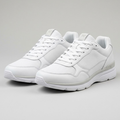
Many adults 50+ notice that a shoe that once felt fine now pinches across the forefoot — especially later in the day. This guide explains how to choose walking shoes for wide feet: when you need a true wider size, how toe room and swelling fit in, and which Shoes 50+ brand guides are useful starting points. This site is a directory, not a store. Confirm current width charts and models on the brand or retailer page you choose.
Not sure which wide fit is right for you?
Try the free Wide Shoe Finder — six short questions about squeeze, length vs width, and swelling. Get a clear width preference profile with what to look for. Footwear guidance only — not medical advice.
For everyday walking priorities beyond width, see our walking shoes hub. Length, closures, and replacement cues are in the shoe fit & buying guide. If you also jog lightly, compare notes on walking shoes vs running shoes.
Wide feet vs needing a longer size
Buying a longer length to “make more room” is a common workaround — and often a poor one. Extra length can leave the heel slipping or the ball of the foot sitting in the wrong place in the shoe. If the forefoot feels squeezed but the length is about right (roughly a thumb’s width beyond your longest toe when standing), look for a true wider width rather than sizing up in length.
- Length first — Stand in the shoes. You generally want about a thumb’s width of space beyond your longest toe.
- Width second — The forefoot should feel held, not burning or bulging. Hot spots on the little toe or across the ball of the foot often mean “try wider,” not “try longer.”
- Toe room — You should be able to wriggle your toes. A roomy toe box and a wider last are related but not identical — some shoes are long and narrow; others are shorter with a broader forefoot. See roomy toe box walking shoes: toe box shape vs wide width for a long second toe, overlapping toes, and bunion room.
Want a quick decision between sizing up and going wider? Use the free Half Size vs Wide Check — three taps that point you toward length, width, or both carefully — then come back to this guide for width labels and brand starting points.
Why width matters more after 50
Feet can change over time. Many people notice more swelling later in the day, a wider forefoot, or less tolerance for tight uppers. That does not mean every adult over 50 needs a wide shoe — it means fit checks matter more than relying on the size you wore ten years ago.
- Try shoes later in the day, when feet are often largest.
- Wear the socks you will actually walk in.
- Walk on a hard floor for several minutes if the store allows — notice pinching that only shows up after a few minutes.
- If one foot is wider, fit the wider foot and adjust lacing or insoles on the other side when needed.
These are comfort and fit comparisons — not medical advice. For persistent swelling, pain, or numbness, talk with a qualified clinician.
How brands label width (plain language)
Width naming is not universal. Different brands use letters, words, or both — and charts can differ for men’s and women’s lines. Treat labels as a shopping language, then confirm the chart for the exact model:
- Named widths — Medium / Wide / Extra-Wide (common on walking specialty and some lifestyle lines).
- Letter codes — Often seen on athletic brands (for example 2E / 4E style codes on some New Balance and similar charts). Exact meaning depends on the brand’s chart for that gender and model.
- “Wide” in the product name only — Marketing language is not always the same as a true multi-width menu. Check whether the seller lists selectable widths.
We do not invent size charts here. Always verify the current width options on the selling page before you buy.
What to look for in wide walking shoes
- A true width option — Not only a larger length.
- A roomy toe box — Space to spread and wriggle toes on longer walks.
- Secure midfoot and heel — Wider forefoot should not mean a heel that slips on every step. Laces or well-designed straps help dial hold.
- Upper that does not dig in — Stretch or softer uppers can feel kinder if the forefoot swells; still check that the heel stays put.
- Removable insole (if you use inserts) — Confirm on the specific model — not every shoe has the same insole depth.
- Outsole grip for your surfaces — Sidewalk, mall floors, or damp pavement.
Closures when feet swell during the day
- Traditional laces — Most adjustable. Useful when you want to loosen the forefoot later without losing heel hold.
- Straps / hook-and-loop — Easy to re-adjust if feet swell on long days or travel.
- Slip-in / hands-free — Convenient, but only worth it if the heel still feels secure when you walk. A roomy entry that heels out on every step is a poor trade.
Brand starting points on this directory
These guides are live on Shoes 50+. They summarize who each brand may suit — not a ranked “best of” list. Confirm current widths and models before you buy.
- New Balance — Strong width menus on many trainers; a frequent starting point when wide or extra-wide fit (and structured options on select lines) matter for walking.
- Orthofeet — Walking-focused specialty brand; stretch uppers, roomy/deep toe boxes, and easy-entry options many shoppers compare for hard-to-fit feet.
- Skechers — Mainstream walking lines with easy-entry options; check that the specific model offers the width and heel hold you need.
- Brooks — Specialty daily trainers many adults 50+ use for brisk walking; selected models list wide / extra-wide options — verify the current SKU.
- Brooks vs New Balance — Side-by-side width codes (2E, 4E, 6E), matching models, and a free Wide Fit Match.
- Hoka — Max-cushion pavement options when soft landings are the priority; width availability varies by model — confirm before assuming a wide is offered.
- Clarks — Comfort brand with Medium and Wide in many styles (no Extra Wide found in its walking styles). Clarks uses its own width letters, so go by the word Wide rather than the letter.
See the full brands index or return to the shoe directory.
Wide walking shoes vs other categories
- Mostly daily walking and errands — Stay with walking shoes and prioritize width + toe room.
- Short easy jogs mixed in — Compare jogging shoes; still insist on true width if the forefoot is tight.
- Gym and class work — A more planted exercise shoe may help, but width still comes first if the forefoot pinches in a stance.
- Wanting a more guided / planted feel — Browse stability-focused shoes after you have a width that does not squeeze.
Common mistakes to avoid
- Sizing up in length instead of choosing a true wider width
- Trying shoes first thing in the morning when feet are smallest
- Ignoring heel slip because “at least my toes have room”
- Assuming every “comfort” shoe offers wide sizes
- Skipping a hard-floor walk test before you commit
Wide shoe fits your toes but your heel slips? See shoes with a narrow heel and wide forefoot for adults over 50 for fit order, heel-lock lacing, and a free 3-tap Heel and Forefoot Fit Check.
FAQ
Are wide shoes better for wide feet?
If the forefoot is truly wide, a true wider size usually fits better than a longer narrow shoe. “Better” still means the midfoot and heel feel secure and you can walk comfortably for your usual distance.
Is wide the same as extra-wide?
No. Extra-wide (or equivalent codes on a brand’s chart) is typically broader than wide. Start with the narrowest width that does not squeeze — too much width can leave the foot sliding.
Can stretch uppers replace a wide size?
Stretch uppers can feel kinder over bunions or mild swelling, but they are not a substitute for a last that is too narrow. Many shoppers combine a roomy/wide option with a stretch upper — see the Orthofeet guide for that lane.
Do I need stability shoes if I have wide feet?
Not automatically. Width and stability answer different questions. Get a non-squeezing fit first, then compare a more guided feel only if you want it — see stability-focused shoes.
Where should I start on Shoes 50+?
Skim the fit & buying guide, then open New Balance and/or Orthofeet if width or hard-to-fit walking comfort is the priority. Return to the walking shoes hub for broader activity notes.
Next steps
- Measure or re-check fit later in the day (see the fit guide).
- Decide whether you need wide or extra-wide — based on forefoot squeeze, not habit.
- Open one or two brand guides that publish real width options, then confirm the current chart before buying.
Health note: General information only — not medical advice. Talk with a clinician if you have foot pain, swelling concerns, balance issues, or questions about starting or changing an exercise routine.