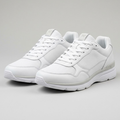
If tying laces or bending down is the daily friction point, hands-free slip-on walking shoes for adults over 50 are a shopping category worth comparing — not a medical device. This guide explains how to check heel hold, midfoot security, and grip so an easy-on shoe still feels steady for errands and mall loops. It is informational only; confirm current models on the brand pages you choose.
For broader everyday walking priorities, start with our walking shoes hub. Closures, length, and replacement cues live in the shoe fit & buying guide. Free tools that help you narrow preferences are listed on the tools page.
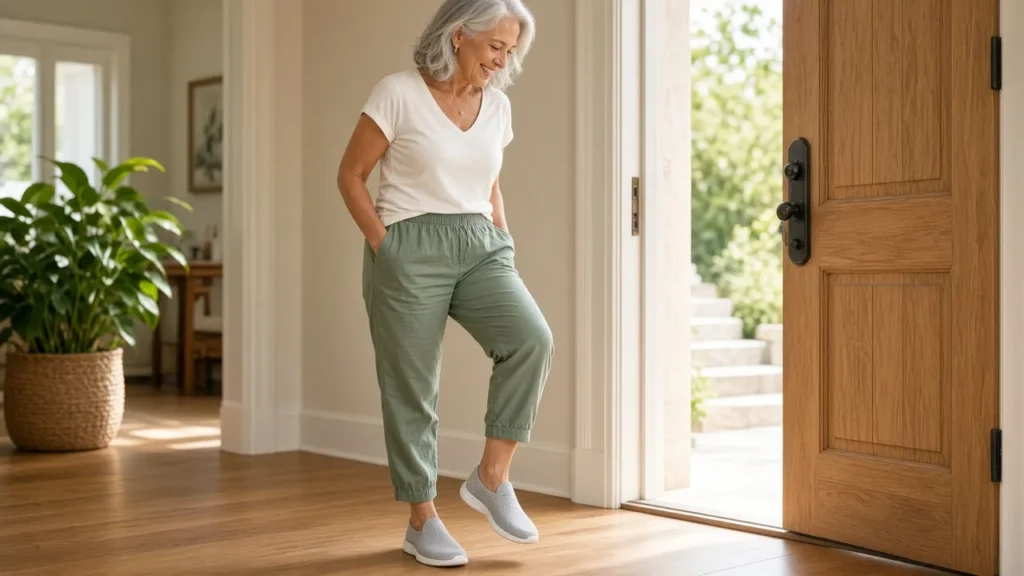
What “hands-free” and slip-on mean in everyday shopping
Shoppers use several labels for the same basic idea: get the shoe on and off with less lace fuss. In store aisles and online filters you may see:
- Slip-on — A classic easy-entry shape. Some still use elastic gores or a soft collar; others look like sneakers without traditional laces.
- Hands-free / slip-in — Marketing language for designs meant to go on with a step-in motion, often with a heel that yields then recovers. Treat the name as a starting filter, then check fit on your feet.
- No-tie / elastic lace systems — Still a shoe you pull on, but with stretch lacing that stays set once adjusted.
None of these labels guarantee a secure walk. Easy entry is only helpful when the heel stays put and the midfoot feels held on the surfaces you actually use — sidewalks, mall floors, travel days. This page helps you compare those comfort and fit ideas before you buy elsewhere.
Who usually compares these shoes
Adults over 50 — and adult children helping a parent — often shortlist hands-free or slip-on walkers when:
- Bending to tie laces is awkward after a long day, or when getting in and out of the car many times.
- They want a simpler morning routine for short errands and neighborhood loops.
- Stiff hands make tiny lace knots frustrating, and they prefer a step-in or easy-adjust option.
- They already like cushioned walking shoes and simply want an easier closure style in a similar everyday category.
If you are still unsure whether your day leans easy-comfort, everyday walker, or a more planted feel, try the free Shoe Type Finder — a short preference quiz (not a diagnosis) that points you toward shoe types, categories, and brands to investigate.
What to check so easy entry still feels secure
Convenience that heels out on every step is a poor trade. Use a short hard-floor walk test whenever you can — in a store aisle or at home during a return window — and check three areas.
Heel hold on a short walk test
Walk at your normal pace for several minutes. Notice whether the heel lifts enough to rub, slap, or make you shorten your stride. A little give at first put-on can settle; repeated lift on every step usually means the collar or heel cup is not holding your foot. Try a different size, width, or model rather than “living with” slip for the sake of easy entry.
After you notice hotspots or slip, the free Shoe Fit Checker walks through practical fit questions (length, width, heel, end-of-day feel) so you can decide what to change next.
Midfoot wrap without harsh pressure
Even without traditional laces, the midfoot should feel gently wrapped — not floating, and not pinched across the top of the foot. Stretch uppers and elastic systems can feel kind if feet swell later in the day, but too much looseness leaves the foot sliding forward. If forefoot room is also a concern, compare notes with the Wide Shoe Finder and our walking shoes for wide feet guide.
Outsole grip for mall floors and sidewalks
Hands-free walkers are often used on polished mall floors, grocery tile, and cracked sidewalks. Check that the outsole feels grippy — not glass-smooth — and that the shoe does not feel tippy when you turn or step off a curb. Soft cushion is welcome; a mushy platform that rolls under your foot is not.
Hands-free vs lace-up vs Velcro — quick comparison
- Hands-free / slip-in — Fastest on and off when the heel holds. Best when your priority is ease and you are willing to walk-test security carefully.
- Traditional lace-up — Most adjustable midfoot and heel dial-in. Slightly slower to put on; still the default when you want maximum fine-tuning for long pavement days.
- Hook-and-loop (Velcro-style) — Easy to re-adjust if feet swell or you change sock thickness. A strong middle path when you want easy fastening without a step-in design.
Many adults over 50 keep more than one pair: a hands-free option for quick errands, and a lace-up or strap shoe for longer walks. That is a preference choice, not a rule.
Leaning toward straps instead? See our velcro walking shoes guide for adults over 50 for what to check on hook-and-loop closures, with a free Strap Shoe Check.
Brand starting points to investigate
These are directory starting points already used on Shoes 50+ — not a ranked “best of” list, and not a claim that we tested specific models. Confirm current easy-entry lines, widths, and fit notes on each brand page before you buy.
- Skechers — Mainstream walking lines with easy-entry and Slip-ins-style angles many shoppers compare for daily errands. Check that the specific model holds your heel on a short walk test.
- Orthofeet — Walking-focused specialty brand; hands-free / easy-on options and stretch or roomy-fit angles shoppers often compare when hard-to-fit feet and simple entry both matter.
Browse the full brands index or return to the shoe directory if you want cushion, stability, or width first and closures second.
Related tools and guides
- Shoe Type Finder — Preference profiles for adults over 50 (Easy-Comfort / Everyday Walker lean often fits this topic).
- Shoe Fit Checker — Practical fit questions after a walk test.
- Wide Shoe Finder — When easy entry coincides with forefoot squeeze.
- Walking shoes hub — Broader comfort and activity notes.
- Fit & buying guide — Length, closures, and when to replace.
- All free tools — Quiz and checker index.
- Buying walking shoes for a parent over 50 — print fit card, try-at-home checklist, Parent Shoe Prep Check.
FAQ
Are hands-free walking shoes secure enough for sidewalks?
They can be — when heel hold, midfoot wrap, and outsole grip feel right on a short walk test. Easy entry alone is not enough. If the heel lifts on every step, try another size, width, or closure style rather than forcing the trade-off.
Is a slip-on the same as a hands-free slip-in?
Not always. “Slip-on” is a broad shopping label. “Hands-free” or “slip-in” often describes designs meant for a step-in motion. Read the product details, then judge fit on your feet — names overlap in marketing.
Should I skip lace-ups entirely if bending is hard?
Not necessarily. Hook-and-loop closures and elastic no-tie systems can also reduce lace fuss while keeping more midfoot adjustability. Compare options on the fit guide and use the Shoe Type Finder if you want a quick preference nudge.
Health note: General footwear information only — not medical advice. Talk with a qualified clinician if you have foot pain, swelling concerns, balance issues, or questions about starting or changing an exercise routine.